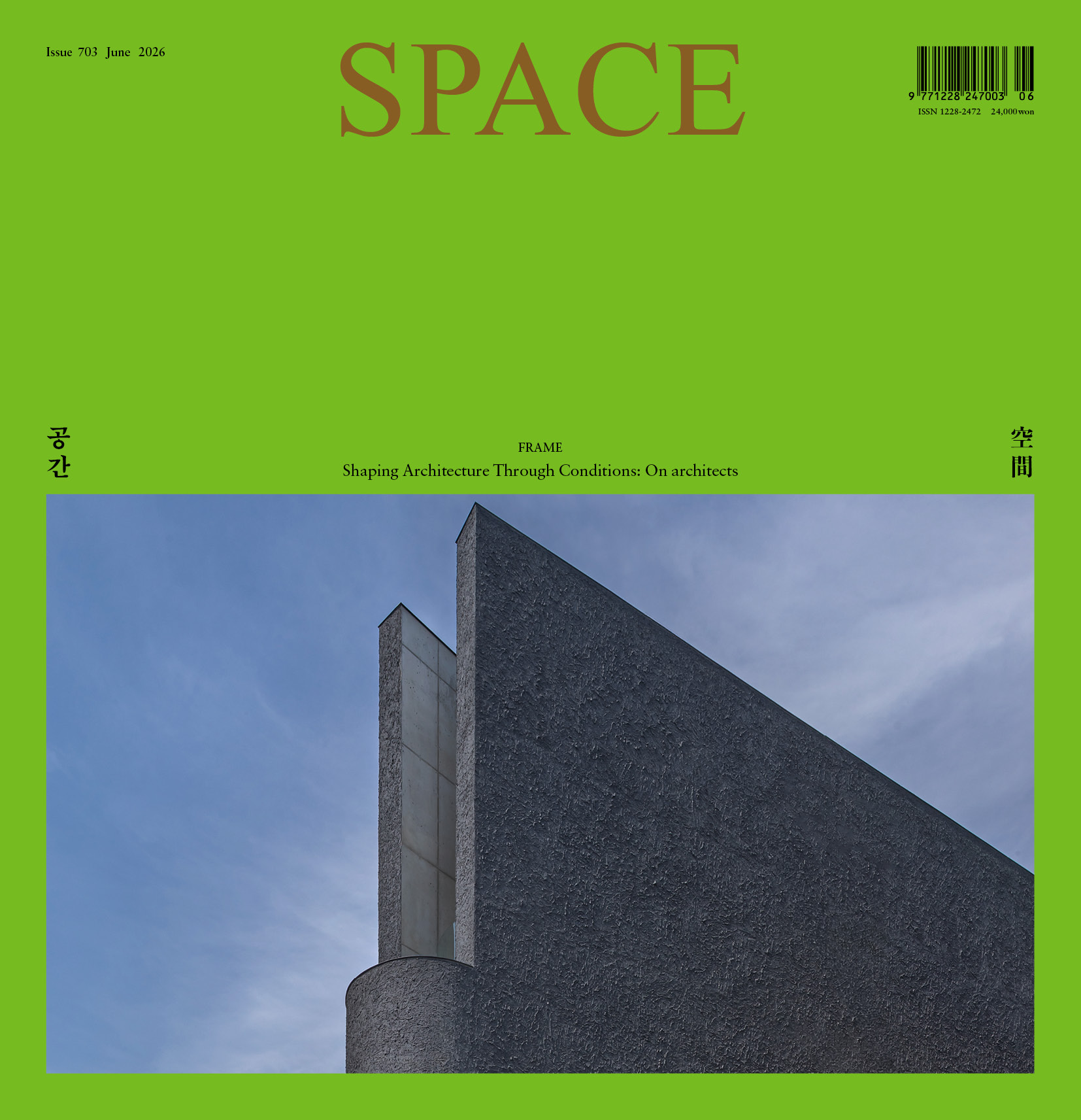

SPACE June 2026 (No. 703)
Simply speaking, a building is made through joints. Floors, columns, walls, stairs, mullions, lighting, and numerous other building elements are given specific materials and forms, then assembled into a single three-dimensional form with screws and bolts. In architecture discipline, the joint is therefore inevitable. Yet how elements meet is always determined by the decisions of designers.
The exhibition, ‘Joints’, held on the third floor of YOUNHYUN Trading’s Space B-E Gallery from Apr. 22 to May 26, revisits the decision-making concealed behind the visible forms of joints. For the nine participating architects and designers, the joint extends beyond a technical device that transfers loads or fixes building components in an equilibrium status; it becomes an attitude toward architecture.
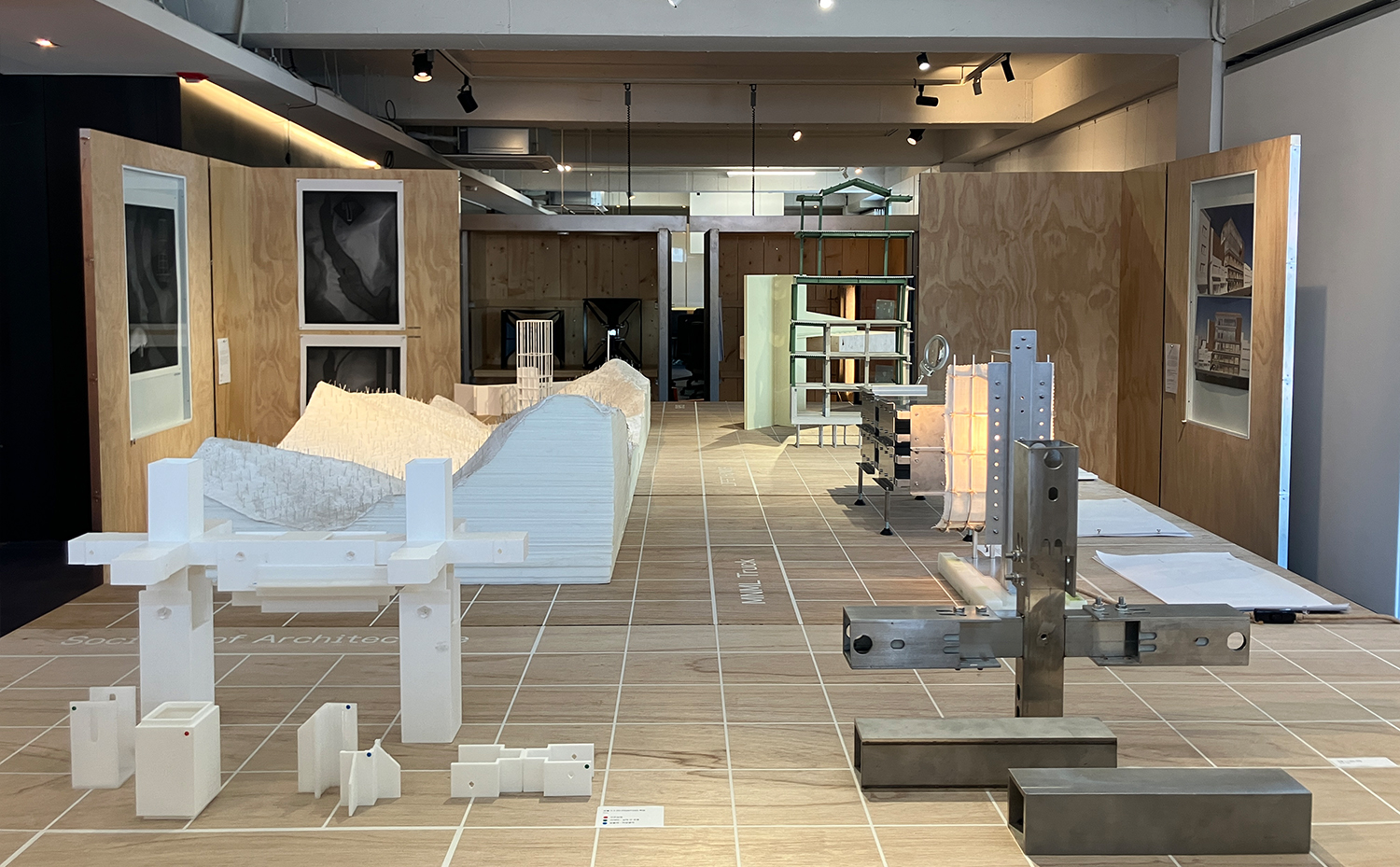
Exhibition view of ‘Joints’ ©Lee Sowoon
Each participant approaches the joint in a different way. First, there is a perspective that understands the joint as an internal logic of design. These architects and designers treat joints as an architectural language to achieve structural integrity and overall consistency. This attitude is most actively expressed in Hyundai Motor Group UX Studio Seoul by SoA, a project that explores the joint as a modular system. By combining a structural core with extruded fastening components, the project creates a one-metre grid and organises various spaces within that system. Rather than aiming for a fixed state, the joint here presupposes temporariness and disassembly, enabling a wide range of spatial flexibility.
In a similar vein, COM presents a series of detailed drawings of its own joint systems which have been developed across multiple projects, including doors, railings, lighting, and partitions. Centred on screws and bolts, these systems reveal the joint as a design language that allows for flexible assembly, disassembly, and modification.
While the previous examples deal with systems that can be repeatedly applied, Lifethings demonstrates the joint as a specific solution responding to given conditions and circumstances. In order to clearly contrast the materiality of the existing concrete structure from the 1970s with the newly attached steel and timber structures, the project adopted a mullionless curtain wall joint. By minimising the connections to the steel columns, it also reduced unnecessary structural reinforcement. SGHS, meanwhile, revisited the details utilised in their Daejeon Memorial Park project that had been postponed or removed due to budgetary constraints.
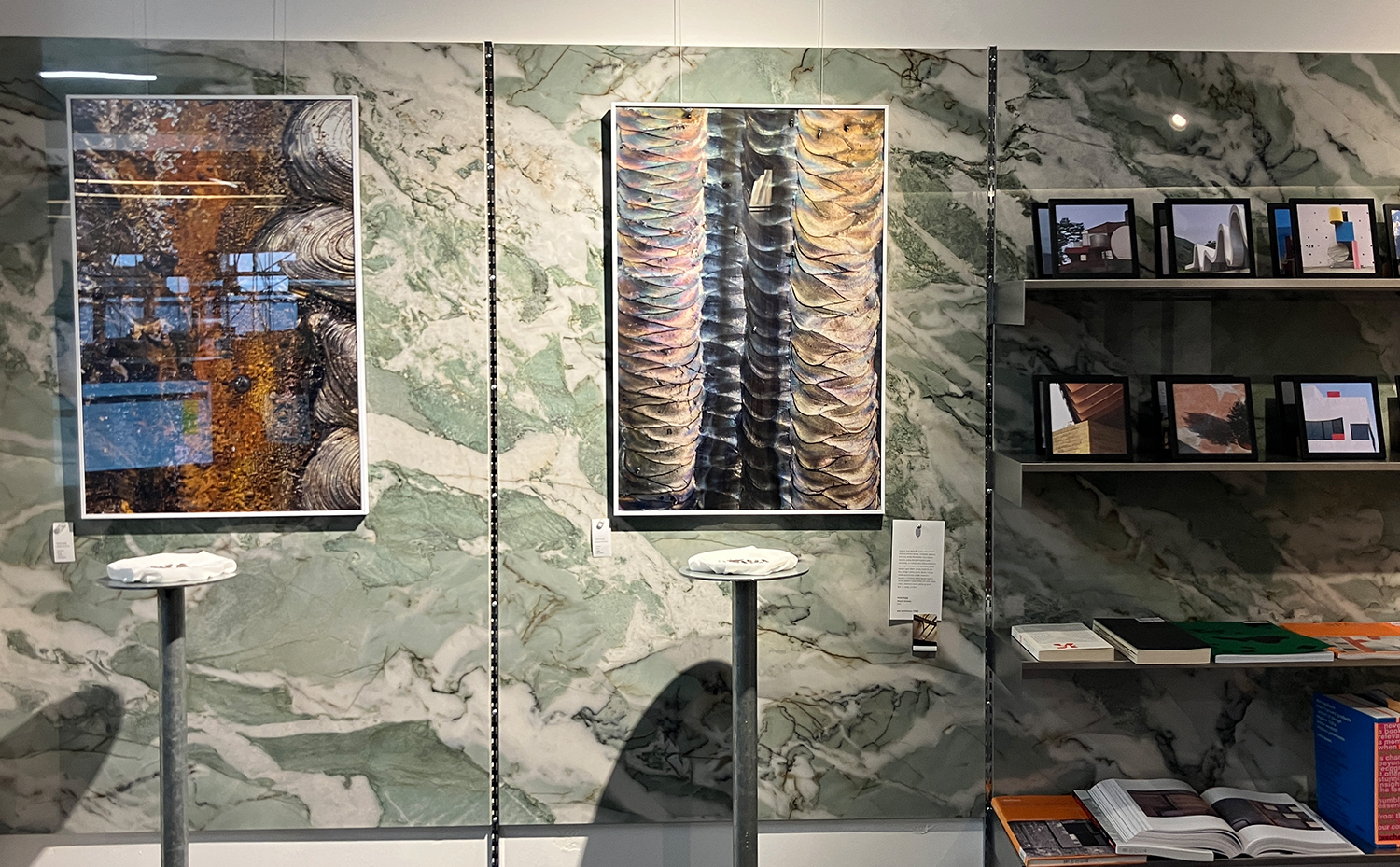
Humble Alchemy by Suh Jaewon ©Lee Sowoon
Meanwhile, there are also attitudes that resist the tendency to treat joints as regulatory datum or signs of order. Kim Hyoyoung and photographer Kim Bokyung capture the moments in which wood and metal interlock in unexpected ways. Rather than focusing on seamless connections, they are interested in the moment when different material properties collide. In their work, materials crack, melt, and deform, yet remain held together in their misaligned state. Suh Jaewon gathered welding slag and titled the work Humble Alchemy. Here, welding slag refers to a byproduct produced during the welding process, often removed in order to achieve a smoother surface finish. Beneath it, traces of welding and unprocessed surfaces remain. The accompanying enlarged photograph of the welded area offers a close view of the material state of the joint before it is concealed beneath a smooth finish.
In addition, MNML Truck and Shim Juyong explored the possibilities of joining through the production process at the scale of objects, while Diagonal Thoughts examined the meaning of joints through furniture that visitors could physically sit on and experience. The nine distinct joints presented in the exhibition reveal each participant’s individual attitude, showing that the joint is not merely a detail, but a way of organising the identity of a project.