
SPACE June 2026 (No. 703)
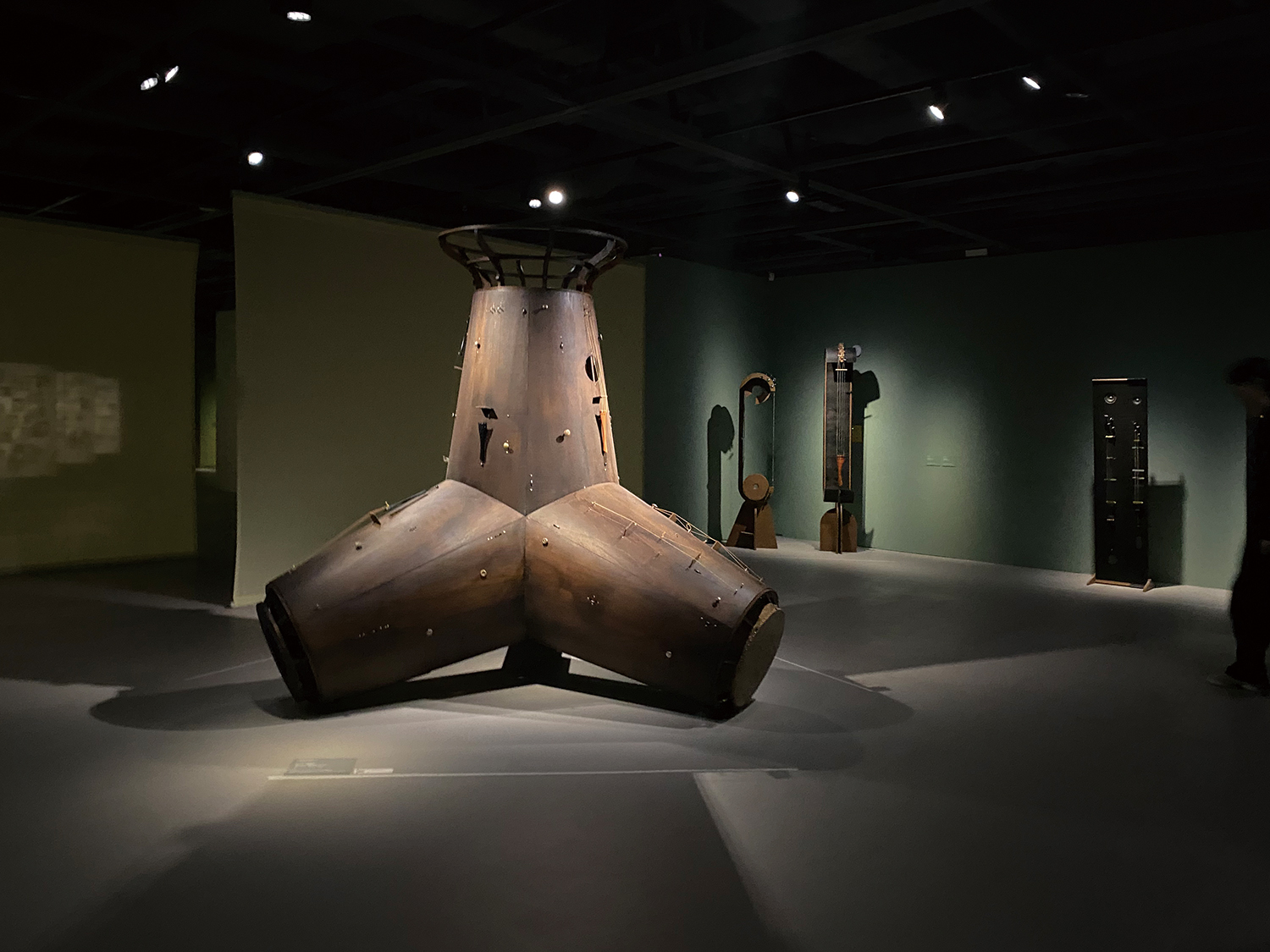
Installation view of Seo Seonghyeop’s Sound Monument (2026) ©Kim Hyerin
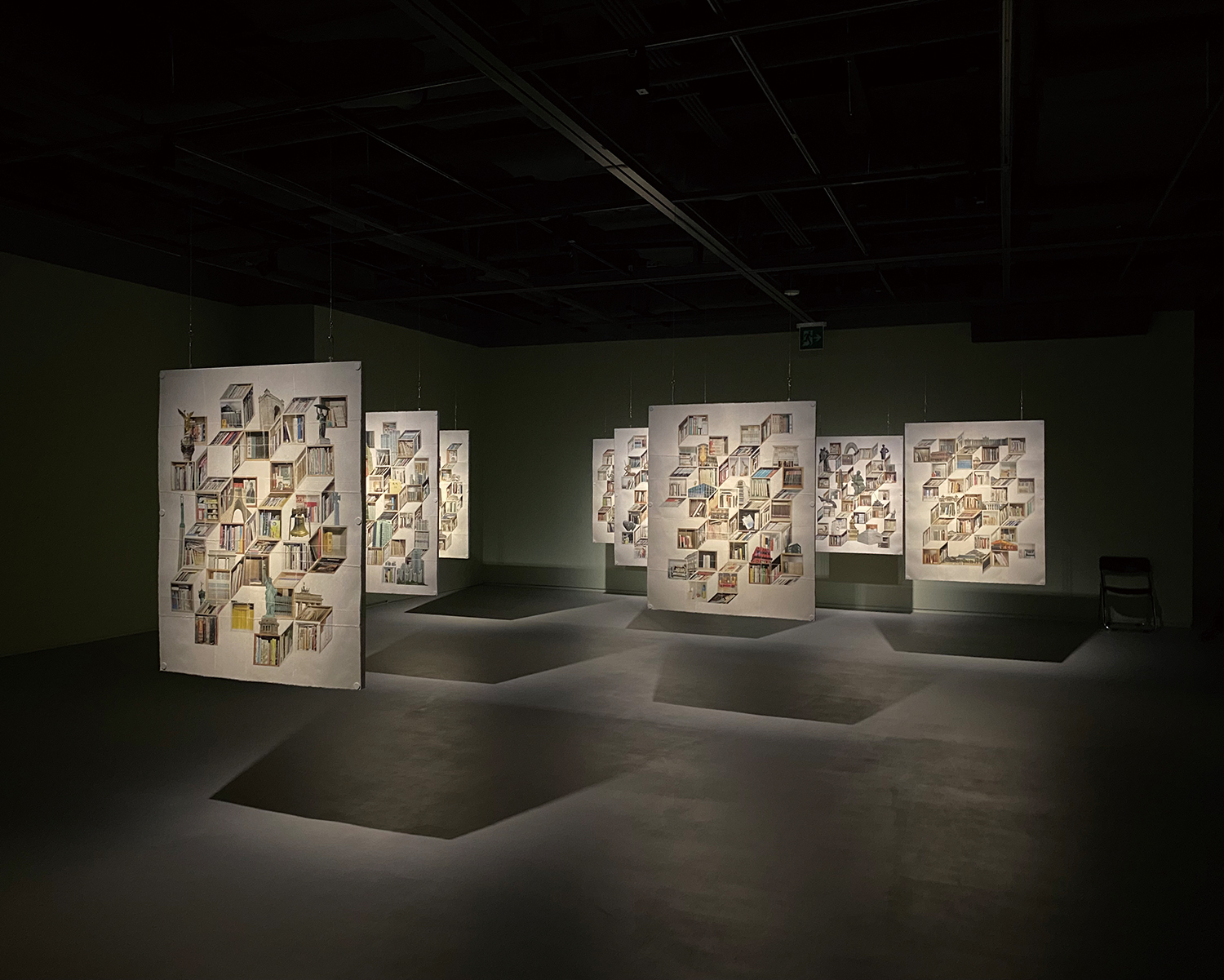
Installation view of Lim Soosik’s Chaekgado series ©Kim Hyerin
On Mar. 26, the exhibition ‘The Silhouette of Memory: Form, Image, Perspective’, which examines the ways in which memories that are rapidly created and consumed in our digital environment from the level of sensory apprehension, opened at the Sehwa Museum of Art. The exhibition features artists Seo Seonghyeop, Lim Soosik, and Kim Bomin who – by using respectively different media such as installation, photography, collage, and painting – progressively reveal the sensory structures that shape memories.
The entrance to the exhibition hall is concealed behind a bookshelf. Visitors, as if trying to recall their memories, are encouraged to push the bookshelf aside to enter the exhibition space, and are first welcomed by visual artist Seo Seonghyeop’s installations which depict forms of memory in an intuitive way. The artist (who also used to run a design studio) presents his explorative work on the convergence of sound and form through sculptural structures made of structural elements, musical instrument parts, and sound devices. The works presented in this exhibition evoke the forms of tetrapods, stringed instruments, and familiar pieces of furniture. In particular, the tetrapods that appear repeatedly in his work bring to mind various boundaries – such as the boundary between land and sea or national borders – while also signifying a point of connection with the new. The artist also uses invisible sensations such as sound and vibration as media to sculpturally express the resonance formed between the material and the immaterial. For example, Sound Monument (2026), which was realised using wood and stringed instrument parts, is a work that prompts reflection on how a monument’s authority and weight come to be constructed and contemplates the process of memory formation at the crossroads between material structures and sensory resonance.
Meanwhile, artist Lim Soosik, who employs photography as both a documentary medium and a sculptural device, uses images to unravel memory as the sensory apprehension of a place and to reveal the layers of time. To clearly articulate the complex properties of memory, Lim employs a variety of techniques: photographs are collaged, printed images are sewn together, and they are presented as folding screen installations. Among his works, his Chaekgado series – which is a reinterpretation of a traditional Joseon-era painting form (chaekgado) through the language of contemporary photography – deconstructs and reconstructs images of actual study rooms and bookshelves to create a portrait-like landscape. This work visually reveals how knowledge and memory accumulate through the arrangement of books and objects. Another notable work is m9600 (2026) which uses the form of traditional folding screens. This work captures and edits images of people entering and exiting Seoul Station, using the contours of the crowd to compare the shapes of Korean and U.S. stock market graphs during the 1997 IMF financial crisis. Through this, the artist explores the various forms that individual memories as well as collective memories take as they take root in our lives.
Artist Kim Bomin presents silhouettes of memories based on traditional landscape painting techniques. Using locations in Seoul such as the Gyeonghuigung Palace, Saemunan, Jamsil, and Hangang River as motifs, the artist overlays the past and present within the context of landscape painting to create landscapes where reality and imagination intersect. Kim’s defining characteristic is her ability to create landscapes that incorporate old folktales, personal sentiments, memories, and emotions. This is particularly evident in Flowers Bloom (2015) which captures the interplay between Gaehwa-dong’s historical folktales and its past natural landscapes with airplanes, bridges, old traditional houses, and apartment buildings. The artist suggested that through the process of visiting and observing actual sites and connecting events via historical documents, memories are both recorded and reconstituted anew. This practice forms the ‘silhouette of the landscape’ and conveys the newly generated memories onto the canvas space. This exhibition which explores the process of memory being formed, recorded, and reborn in various ways runs until June 28.