
SPACE February 2026 (No. 699)
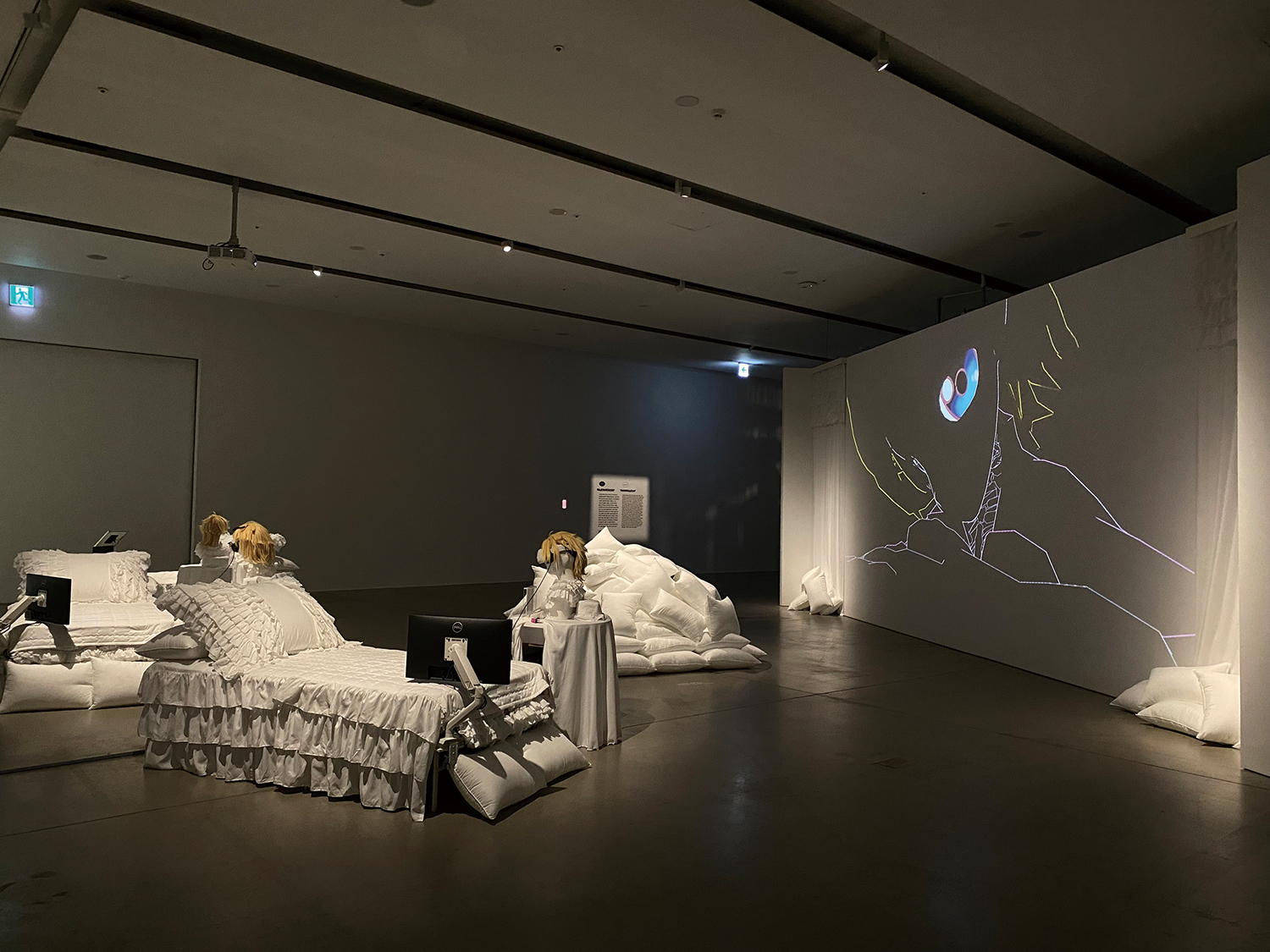
Installation view of Line of Piers’ A Night Darker Than Night (2025) ©Kim Hyerin
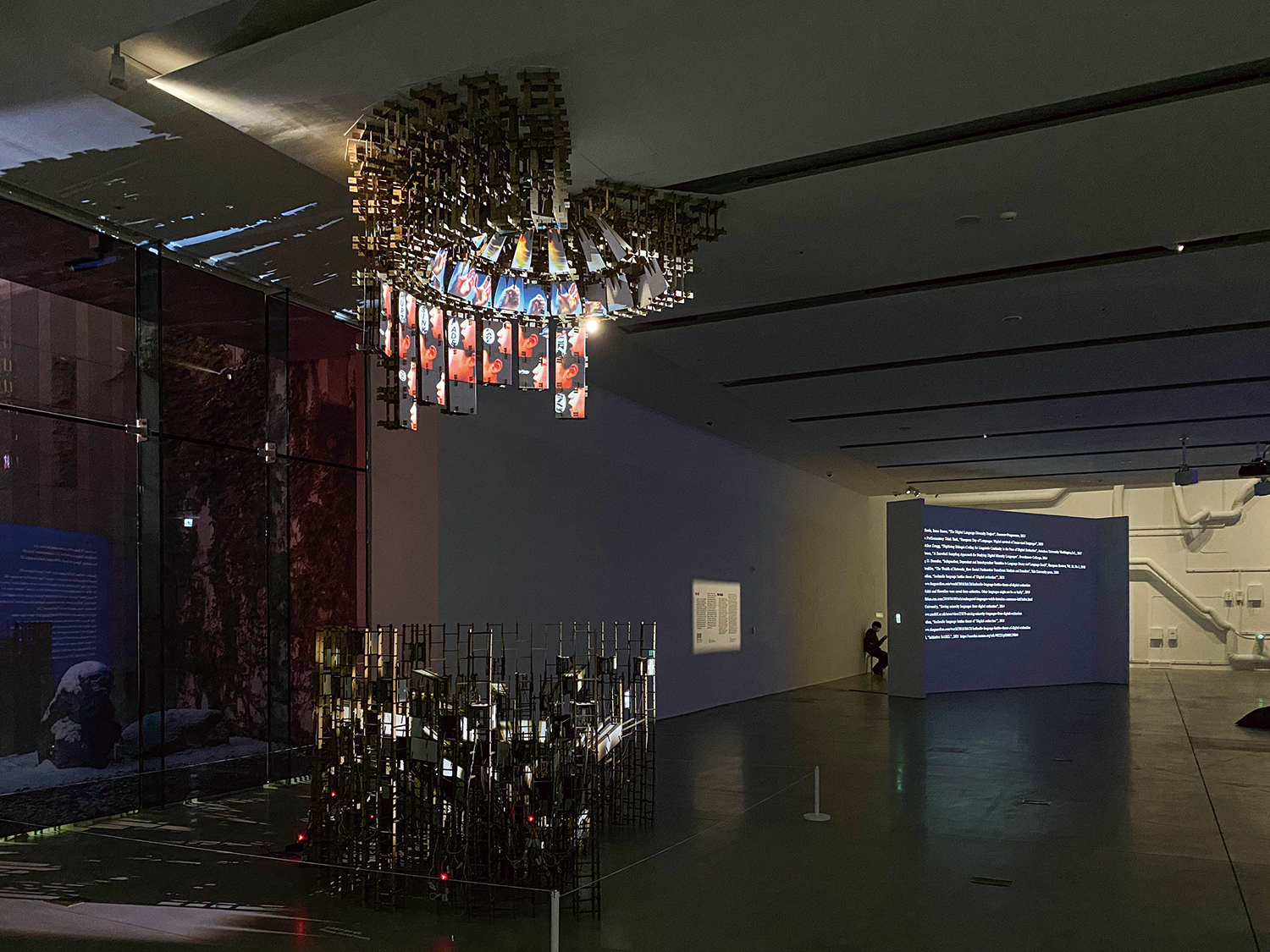
Exhibition view of ‘Electric Shock’, foreground works Song Yehwan’s Electrical Minorities (2025) and The Whirlpool (2025) ©Kim Hyerin
‘Electric Shock’, an exhibition centred on the theme of electricity, featuring five media artists (or collectives) ‒ Line of Piers, Kim Woojin, Park Yena, Song Yehwan, eobchae ‒ opened on Dec. 4 at the Buk-Seoul Museum of Art (SeMA). The exhibition moves from Part I, ‘Electricity Is Always with Us’, which surveys electricity from a present-day perspective, to Part II, ‘Electricity Supply Has Been Disrupted’, which imagines an extreme scenario in which power is cut off. Together, the two sections examine the sharp tensions between technology and environment that shape contemporary life.
Among the most notable works are the artist collective Line of Piers’ new MR-based installation A Night Darker Than Night (2025) and their interactive real-time simulation Bishoujo does incarnate (2024 – 2025). Upon entering the gallery, visitors encounter A Night Darker Than Night—a large screen installed in front of white curtains, white beds, topped with piled pillows, MR devices fitted with golden wigs, and the upper bodies of mannequins wearing the devices. When visitors sit on the beds and put on the MR headsets, a pajama party unfolds above the physical exhibition space, populated by ‘bishoujo (pretty girl)’ characters named TEE. Drifting through the space and dancing, the TEEs deliver cryptic lines to the audience. As they gradually fall asleep, the pajama party is repeatedly interrupted, prompting visitors to follow instructions to raise their fingers and generate an electric current to awaken the discharged TEEs. Though the characters appear autonomous, they can only continue operating through audience intervention, making them a metaphor for electronic devices themselves. In apocalyptic scenes, the TEEs ultimately sink back into sleep ‒ into a discharged state ‒ but the moment the MR device is worn, the TEEs ‒ those electronic devices we exploit and depend upon ‒ are reawakened to dance and sing once again.
At the end of the exhibition, Line of Piers’ earlier work Bishoujo does incarnate appears as a game set within a VR chat server abandoned by users and inhabited only by AI chatbots. The game is played by the player inhabiting the body of the avatar TEE. Focusing on how bishoujo avatars are used within online communities and the ambivalent desires that consume them, the artists understand the bishoujo as both a space and a conduit in which expressions of sexuality and gender intimacy intermingle, attempting a form of subversion through the mediated body.
Song Yehwan’s new work Electrical Minorities (2025) also stands out. Installed alongside The Whirlpool (2025), which visualises the closed structure of filter bubbles▼1 produced by the internet and social media, this work highlights those excluded from access to electricity and technology. Depending on the placement of solar cells beneath a light source, the amount of electricity supplied varies, altering the operation of the LCD screens—an arrangement that exposes inequalities in electrical consumption and highlights the fact that stable internet access presupposes reliable power as a form of privilege. On the segmented LCD screens, a video documents the artist’s performance of roaming the city while wearing a jacket fitted with solar panels and charging electricity directly. The work reflects critically on how media art ‒ despite its heavy consumption of electricity ‒ has often responded insensitively to the very issues surrounding power that define our present moment.
The exhibition also includes Kim Woojin’s The Ghost, Sea and Möbius (2022), which weaves personal narrative into stories of disappearing languages and regional decline amid digital transformation, and Ossia Organ (2025) by Park Yena, which creates a space that continues to respond to human movement even after electricity has been cut off; and eobchae’s ROLA ROLLS (2024), which tells the story of ROLA, a new post-human species born in a post-petroleum era after fossil fuels have been exhausted. The exhibition runs through Mar. 22.
_
1 Filter bubbles refer to the phenomenon in which users are exposed only to selective information as a result of personalised recommendation systems and algorithms within digital environments.