
SPACE February 2026 (No. 699)
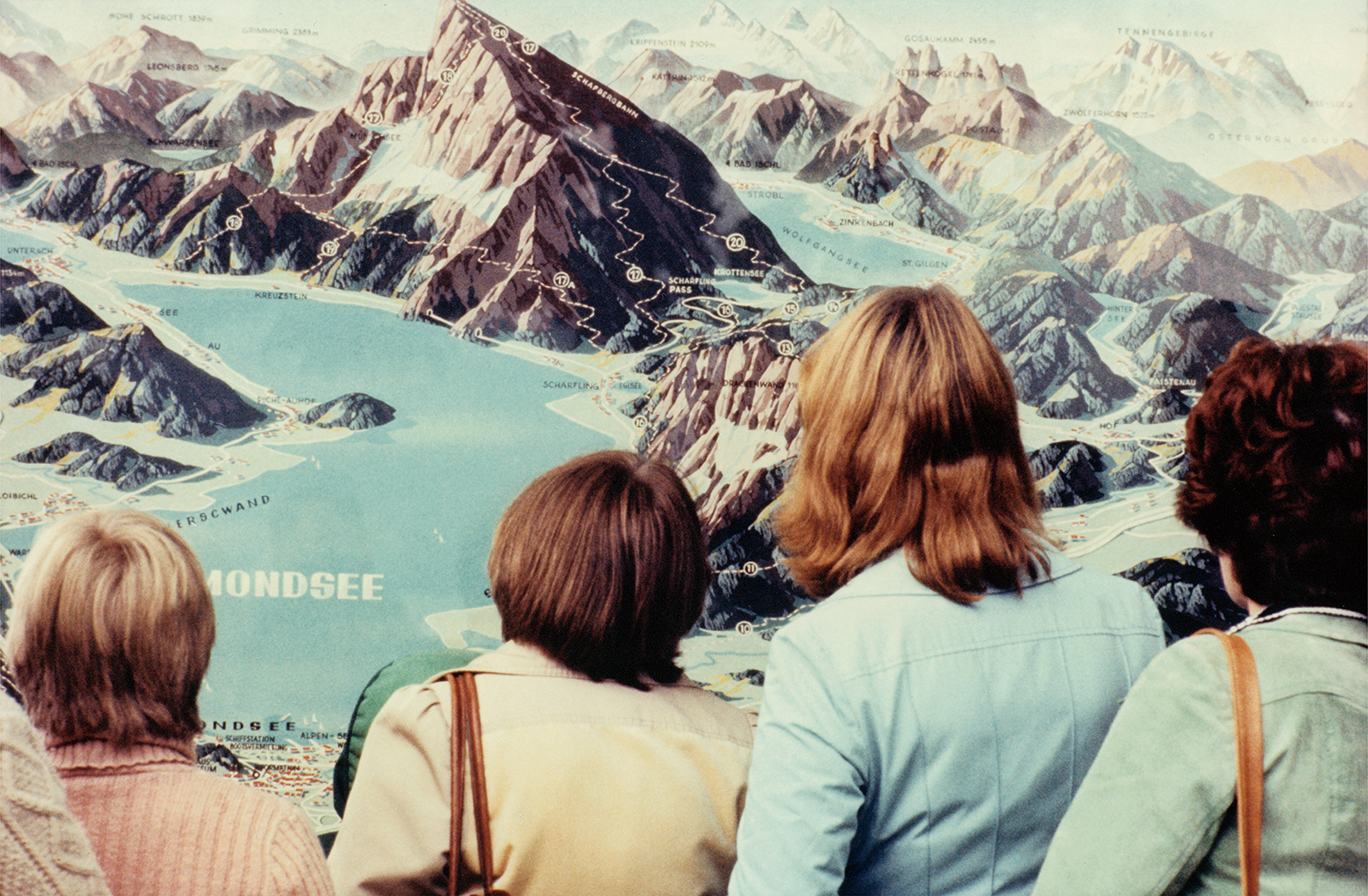
Salzburg, f/11, 1/125, Natural Light series, 1977, c-print, 24 × 35.5cm, 1977 ©Heirs of Luigi Ghirr
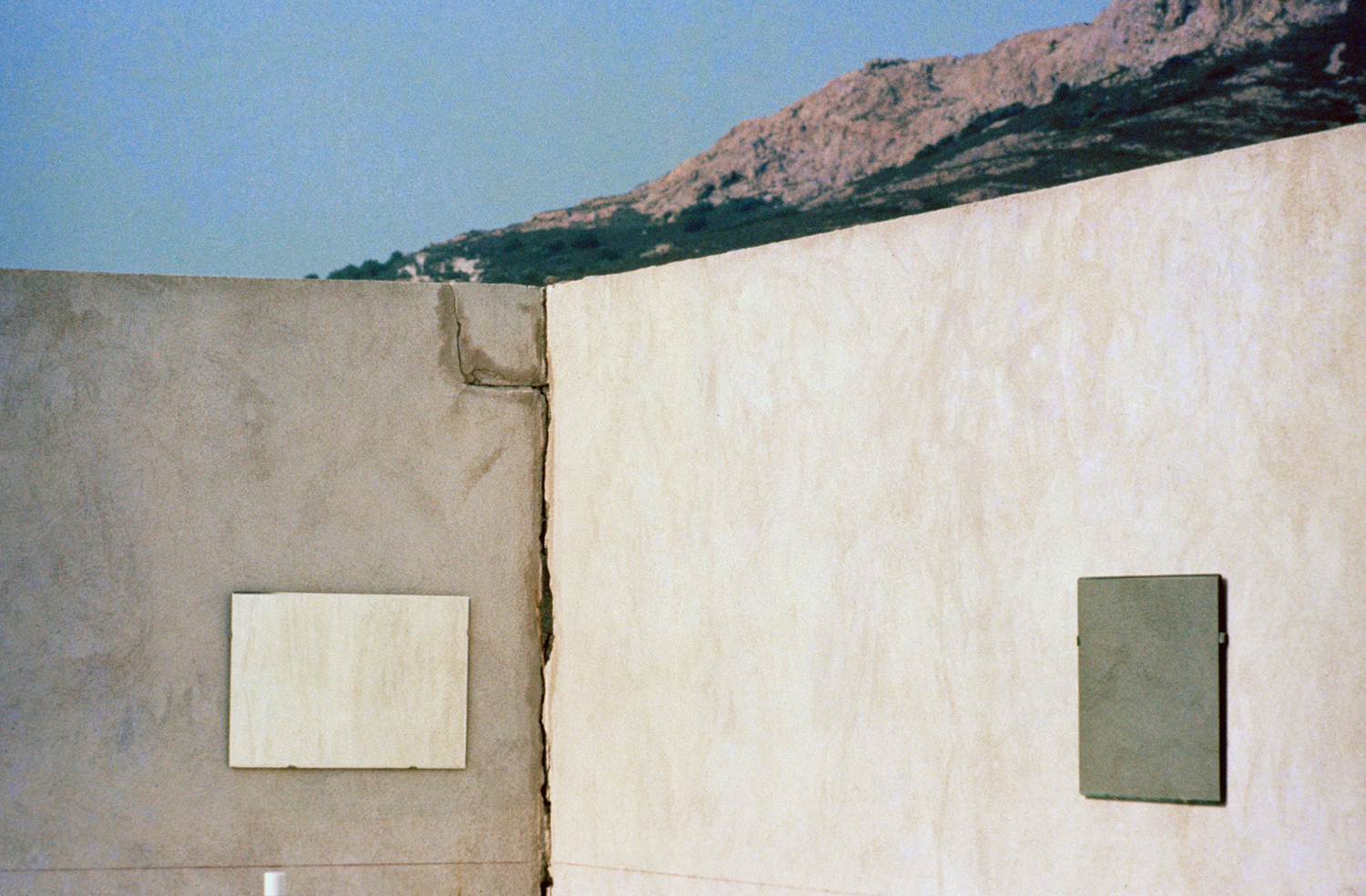
le Rousse, Kodachrome series, c-print, 17 × 27cm, 1976 ©Heirs of Luigi Ghirr
On Dec. 12, 2025 the first retrospective exhibition of Luigi Ghirri (1943 ‒ 1992) in Korea, ‘Infinite Landscapes’, opened at Museum Hanmi Samcheong. Luigi Ghirri is well-known as a pioneer of Italian colour photography, who introduced a new visual language and aesthetic at a time when contemporary photographic discourse was largely dominated by the U.S. Since the 1970s, when he began his career as a photographer, he approached photography as a tool for thought. In other words, photography is an instrument for expanding perception through visual elements within the frame and for generating new meaning through context. For him, the photographer was more than someone who merely replicated landscapes, but rather ‘a person immersed in their own role and practice’. This exhibition features approximately 130 works that trace the artist’s life and perspective, spanning from his early works in the 1970s to his last projects.
The exhibition begins with the first section, ‘Object and Image 1’, which captures fragments of the urban environment that Luigi Ghirri encountered in his everyday life. In the series Photographs from my Early Years (1971), presented in this section, Ghirri highlights the poetic value of ordinary objects through motifs such as a snow globe swirling with flurries or a crumpled black plastic bag with gold stars. Meanwhile, the Kodachrome (1970 – 1978) series offers a wide range of Ghirri’s framed landscapes. From nature elements such as trees to architectural elements including windows, doors, and mirrors, the scenes are shattered and connected through his framing. Through this process, he invites viewers to rediscover the familiar landscape through a fresh perspective.
The exhibition continues in the second section, ‘Object and Image 2’. In this section, Ghirri explores the structure of observation and the relationships between different image elements. In the series f/11, 1/125, Natural Light (1970 – 1979), titled after the camera’s aperture value, shutter speed, and lighting conditions, he repeatedly captures the back view of individuals gazing at landscapes and artworks. These images of people create a multilayered structure that includes the photographer’s viewpoint, the perspective within the image, and the gaze of the viewer in the exhibition space. All of these layers overlap and intertwine. As suggested in the work ‘natural light’, Ghirri considered light, alongside framing, as one of the essential elements of photography. He often captures and records the time through the shifting quality of light within space. In this context, he described photography as ‘a medium inherently connected to the relationship between space and time’. In addition, the Still Life (1977 – 1980) series presents everyday objects including, telescopes, cigarettes, maps, books, paintings, and blank mirrors that fascinated Ghirri. Both composition and arrangement of still life generate new layers of meaning, inviting viewers to imagine the unseen contexts beyond the surface.
On the lower floor, two sections; ‘Italian Landscape 1’ and ‘Italian Landscape 2’, welcome guests. Another body of work, Italian Landscape (1989 – 1992) series, consisting of scenes captured during his travels across southern and northern Italy, is presented across these two sections. These images, such as juxtapositions of ancient temples and nature, or partial views of classical sculptures, convey a sense of place shaped by subjective perception. Additionally, this section includes a dedicated space featuring the works and archives of Paola Borgonzoni, Ghirri’s wife and longtime collaborator.
The final section, ‘Studio Landscapes’, presents portraits of space in which human figures are absent, instead highlighting everyday objects such as books, records, and architectural materials. It includes Ghirri’s Identikit (1976 – 1979) series, which documents the interior of his own home, as well as the studios of architect Aldo Rossi and painter Giorgio Morandi. The exhibition runs through Mar. 15, 2026.