




SPACE February 2026 (No. 699)
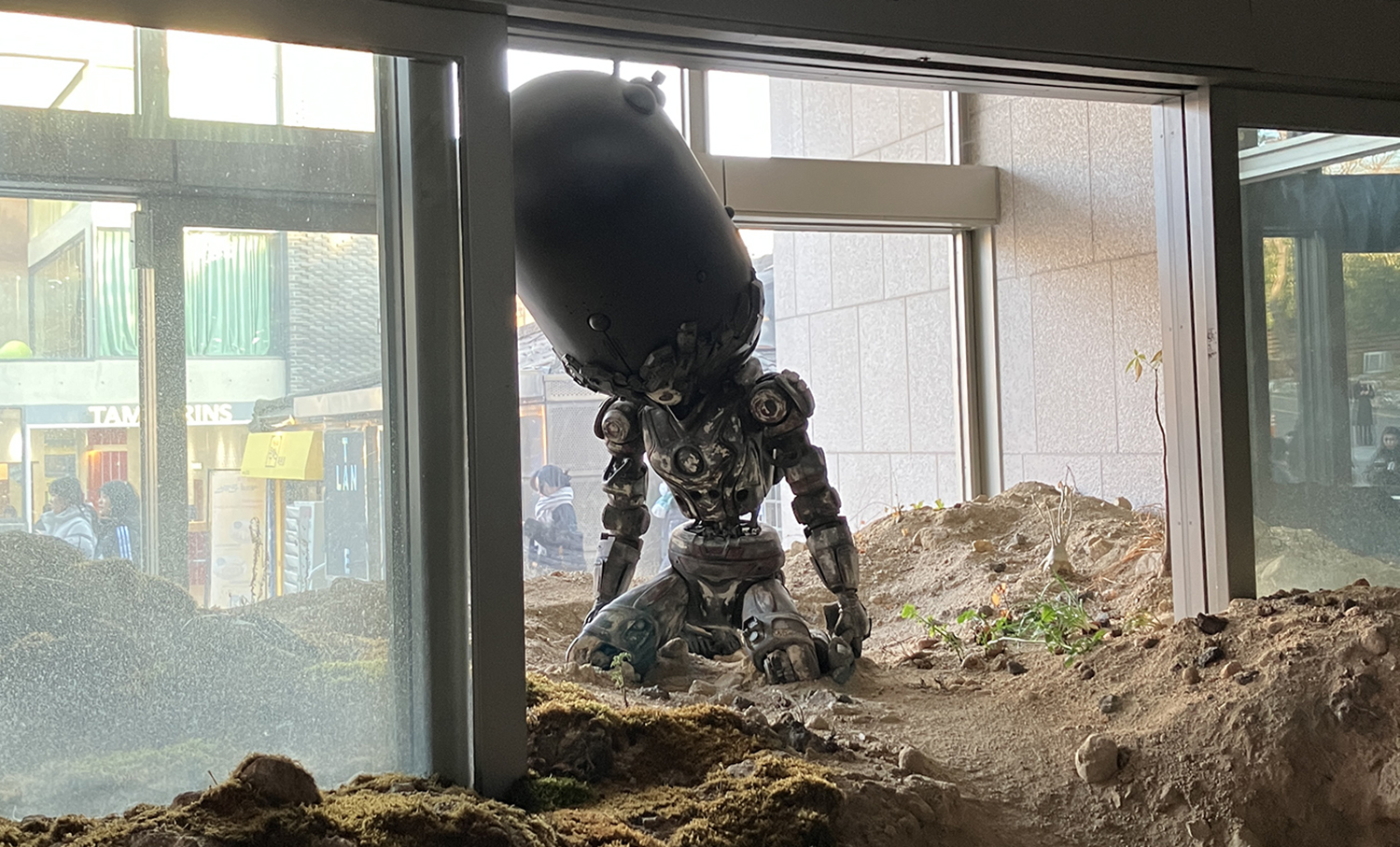
Installation view of The End of Imagination III (2024) ©Lee Sowoon
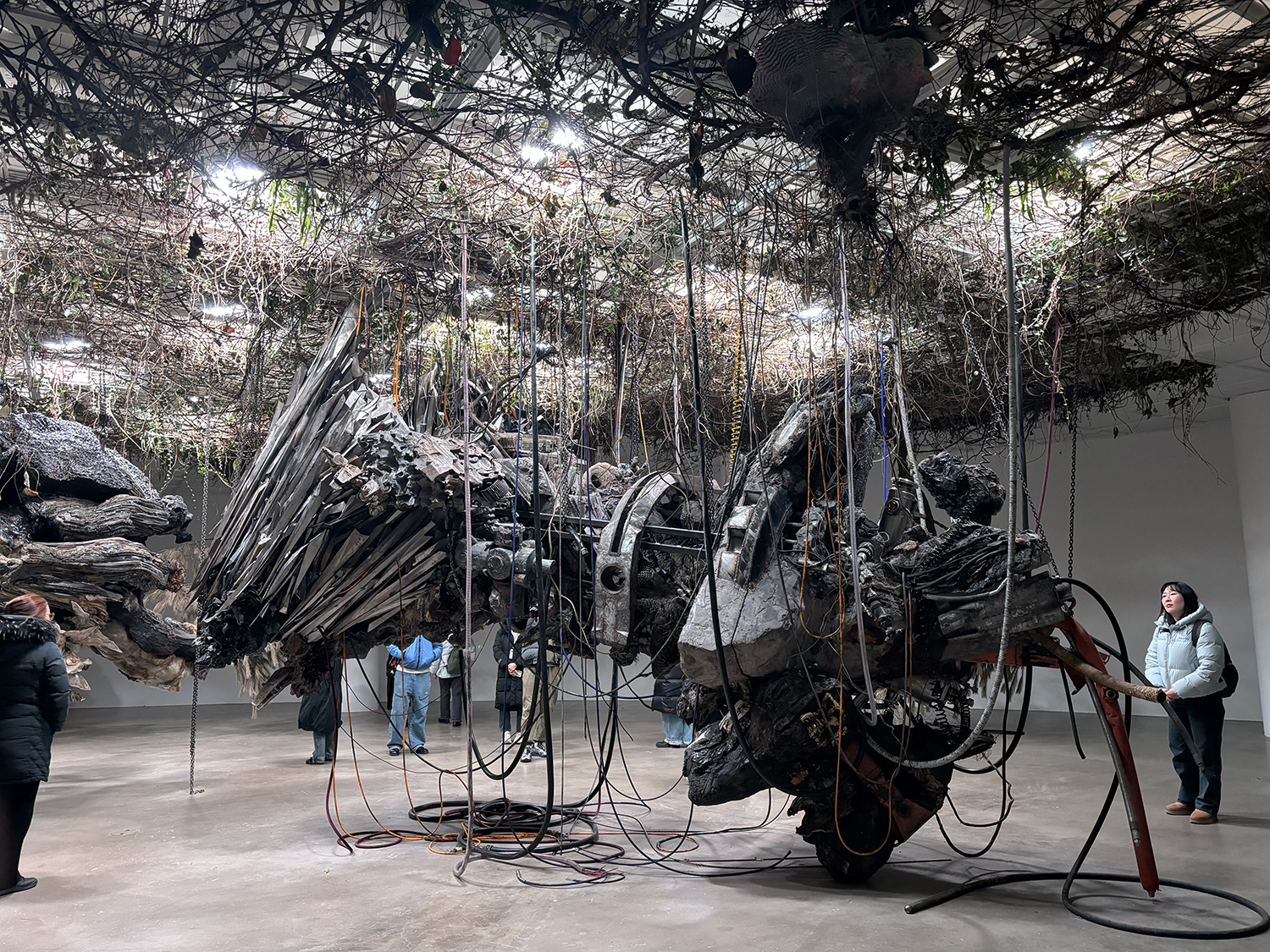
Installation view of The End of Imagination I (2022) ©Cho Sanghee
The exhibition ‘Adrián Villar Rojas: The Language of the Enemy’, which transforms the museum building into a vast sculptural ecosystem, opened at Art Sonje Center on Sep. 3, 2025. Conceived as a large-scale, site-specific project commemorating the 30th anniversary of the institution ‒ tracing back to ‘Sprout’, the first exhibition held in the former private residence that once stood on the site before Art Sonje Center opened in 1995 ‒ the exhibition overturns the established order of the museum as a space for preservation and contemplation, converting the entire building into an apocalyptic landscape.
Upon entering the exhibition, the interior is a terrain shaped by long-term erosion and weathering. Existing entrances are sealed with mounds of soil, and the white partitions emblematic of the white cube have been dismantled, revealing the building’s concrete structure in a return to its bare bones. The gallery’s temperature and humidity control systems have also been deliberately shut down, staging a condition in which human systems of management are loosened through the intervention of soil, plants, fungi, and time.
This landscape is titled ‘The Language of the Enemy’. For Villar Rojas, the ‘enemy’ refers to a form of complete otherness that humanity encounters for the first time. Homo sapiens did not invent language and symbolic systems in isolation; rather, systems of meaning emerged through encounters with others such as Neanderthals and Denisovans. From this perspective, the exhibition’s apocalyptic scenery visualises a temporal zone in which human-centred order is no longer singular or absolute. Today, this otherness reappears in the form of AI, another agent of generation that operates beyond human cognition and language. The exhibition allows viewers to experience this condition by destabilising the very format of the museum, long grounded in anthropocentric order.
The exhibition centres on The End of Imagination, a series Villar Rojas has been developing since 2022. The bizarre sculptures, which appear as though excavated from ruins of the future, seem to demand acceptance of a hybrid world in which humans and non-humans, nature and machines, are entangled. While we have already entered a phase of dependency, sharing knowledge with AI, we simultaneously have anxiety that such relations may herald the fall of humanity itself. Confronting this contradiction head-on, Villar Rojas advances his practice toward the possibility of ‘collaborative imagination’, in which humans and AI work together to generate meaning.
The End of Imagination starts from a Time Engine that Rojas developed himself. The Time Engine is a simulation tool based on game engines and AI. This system constructs parallel worlds in digital space where evolving life forms, architecture, ecosystems, socio-political conditions, and material conditions are interwoven. Within this ‘synthetic system’, where countless heterogeneous variables intervene, the causal relationship between input parameters and generated forms remains a black box—opaque to human modes of perception. The artist downloads virtual parts generated within this system and materialises them in the physical world. These parts are composites layered with organic and inorganic materials ‒ such as metal, concrete, plastic, soil, glass, resin, salt, tree bark, and automobile parts ‒ bearing traces of labour shared between humans and machines.
On the third floor, the exhibition culminates in blazing fire contained within a UV grid membrane evocative of the digital. This scene condenses the condition in which the terms of imagination and creation have already moved beyond the reaches of humans, entangled with algorithms and non-human intelligence. Fire, one of the oldest forces domesticated by humans, appears here not as a familiar tool but as an alien creation and an unavoidable presence that demands that we rethink the very dynamics of collaboration and survival.
Through site-specific intervention of the museum building and collaboration with AI, the exhibition unfolds across the entire space showcasing the conditions under which creative acts have shifted into systems external to the human. ‘Adrián Villar Rojas: The Language of the Enemy’ runs through Feb. 1, 2026.
4