




SPACE January 2026 (No. 698)
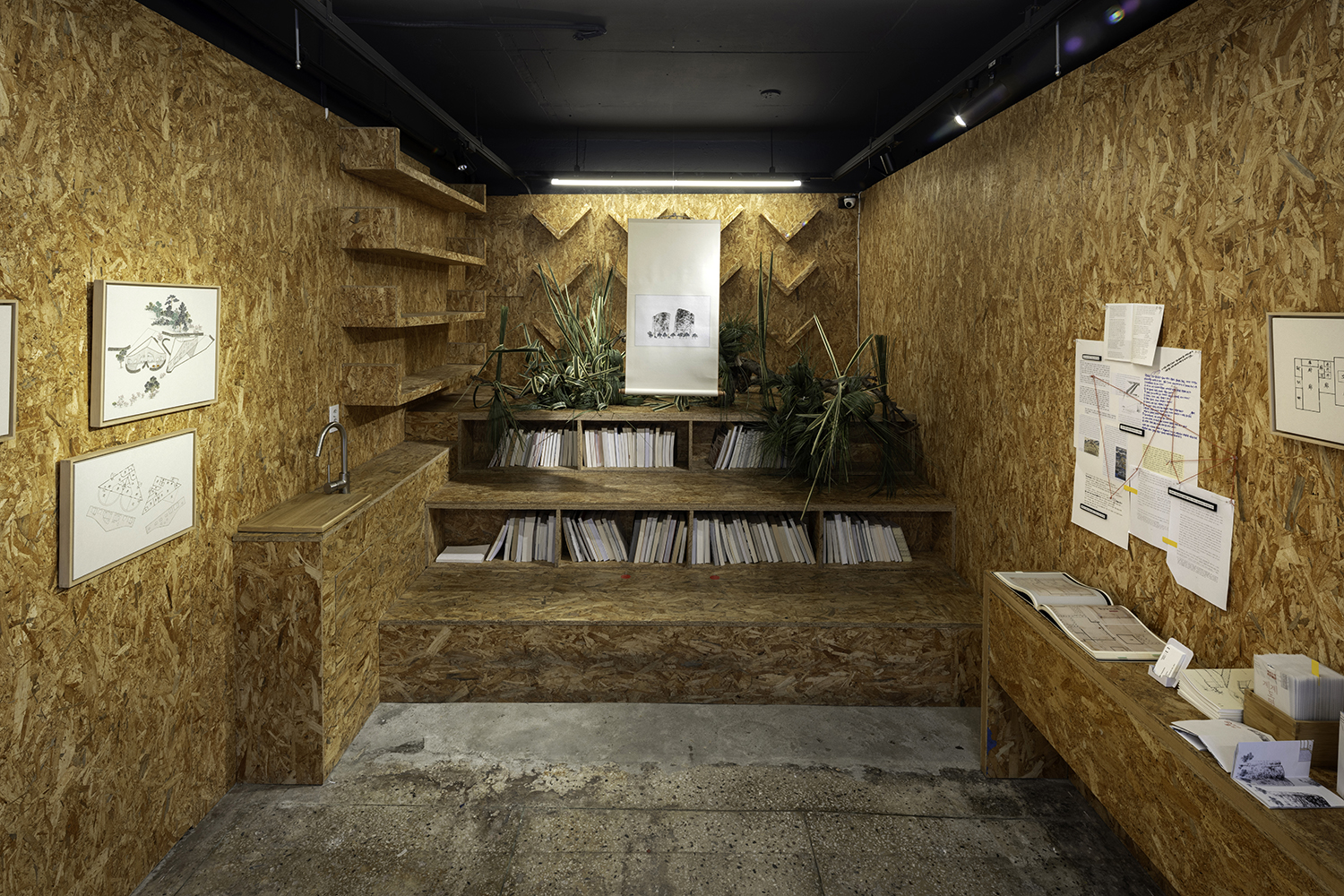
Exhibition view of ‘The Gyehwa Project’ ©tabial
Last year, the exhibition ‘The Gyehwa Project’, hosted by by_[blank] and curated by Kim Bohyun, was held at Domansa. By using a traditional painting technique gyehwa (界畵), the exhibition sought to reinterpret contemporary architectural drawings and to experiment with the gap that emerges between modern architectural plans and traditional painting.
Gyehwa refers to a technique of drawing straight lines using a ruler called gyecheok (界尺). It was primarily used to depict architectural structures such as pavilions and palaces with precision. In Korea, this technique have been systematised during the late Joseon period, particularly around the reign of King Jeongjo, an era marked by a cultural and artistic flourishing. Unlike landscape or figure painting, which are named after their subjects, gyehwa takes its name from the tool used to produce it.
‘The Gyehwa Project’ revived this historical mode from a contemporary perspective, transforming modern architecture – dominated by CAD drawings – into painterly works rendered in brush and ink. The original paintings were created by Korean painter Kim Eunjeong. The selected architectural works include Twin Tree Tower (2010, covered in SPACE No. 522) and Blue Barn (2024, covered in SPACE No. 684) by BCHO Partners (Principal, Cho Byoungsoo), as well as Som Planet (2023) and Stay in Sunheul (2019, covered in SPACE No. 625) by YOAP architects (Co-Principals, Ryoo Inkeun, Kim Doran, Jeong Sangkyong). Without conducting site visits, Kim Eunjeong reconstructed each building solely on the basis of drawings and photographic materials, composing them in the distinctive parallel-diagonal perspective characteristic of late Joseon gyehwa. Urban street trees and vegetation were depicted using classical methods of rendering foliage. The Twin Tree Tower, whose structural details were translated into the formal language of gyehwa, was portrayed fittingly as two tree trunks growing side by side. In the plan drawings, lines were simplified and Chinese-character legends were added, highlighting the restrained and refined aesthetic unique of gyehwa. The exhibition, which ran until Nov. 4, presented the original gyehwa paintings. Post exhibition, the works continue to be accessible in the form of art posters.
5