
SPACE January 2026 (No. 698)
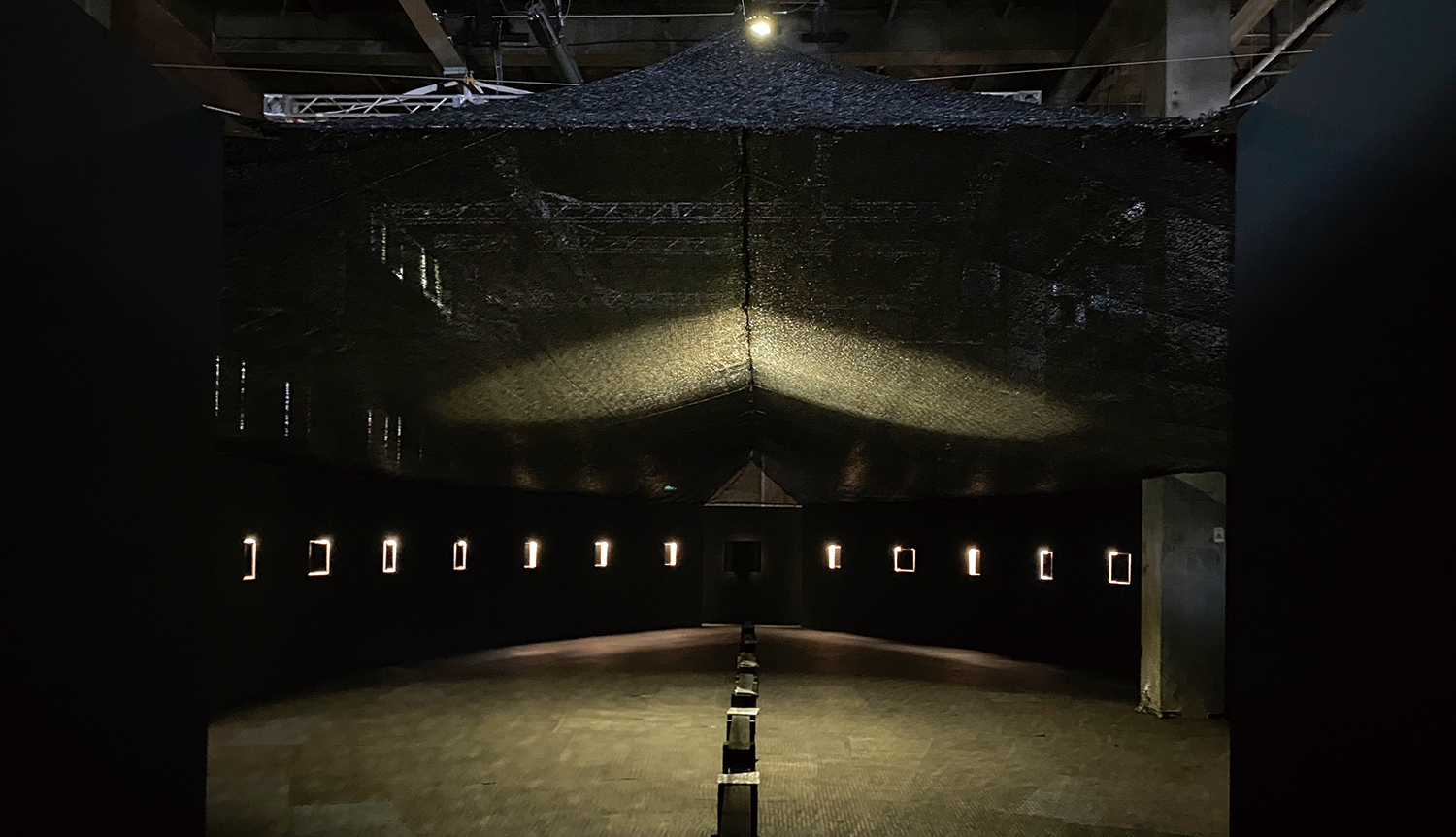
Exhibition view of ‘Dialogue 04: Invisible to Them’ ©Kim Hyerin
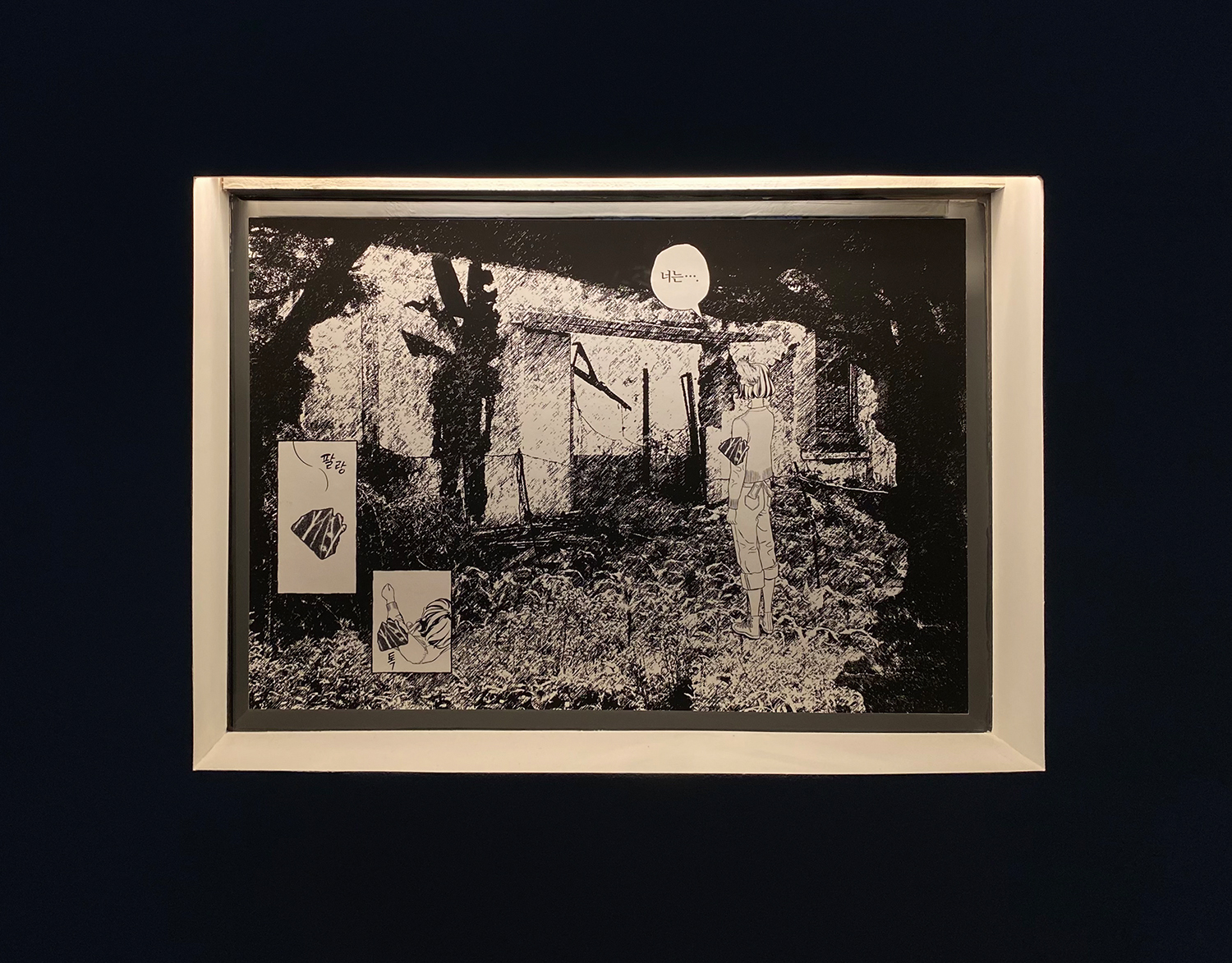
Kuroda’s comics Invisible to Them (2025), installed as part of the exhibition ©Kim Hyerin
From Nov. 7 to 21, the exhibition ‘Dialogue 04: Invisible to Them’ was presented at the First Powerplant (Building 68) of Seoul National University, organised by the Seoul National University Institute for Culture and Art. The exhibition collaborated by the architectural studio FHHH FRIENDS and manga artist collective Kuroda proposed a new way of reading the relationship between architecture and comics.
Upon entering the exhibition space, visitors encounter 48 specially designed temporary walls designed by FHHH FRIENDS, installed in a flowing, curvilinear arrangement. Moving through the darkened space along a curved path, visitors view comics panels embedded at the centre of each wall. For the exhibition, Kuroda created Invisible to Them, the story of a girl and a boy who steal away to a forest. The narrative begins as a girl enters a forest rumoured to be inhabited by a monster. There, she discovers a seemingly monstrous boy watching her, while simultaneously wandering in search of something she has lost. The recurring shadows, the mystery of what she seeks (yet unrevealed), and the gaps between wandering and discovery draws viewers into a space of speculation and imagination. Following these questions, visitors encounter window-like openings at the centre of the walls, resembling blank pages. Inside these openings lies only a dark, shadowy void, further amplifying the narrative gaps. The wall structures, used as a medium throughout the exhibition, can be understood in the same context as the architectural installation presented by FHHH FRIENDS in their earlier exhibition ‘Watch and Chill 3.0: Streaming Suspense’ (2023) at the National Museum of Modern and Contemporary Art, Korea. That work was intended to evoke the experience of navigating a maze. Whereas in the previous work translucent PE material allowed light to pass through, provoking curiosity about what lies beyond, this installation uses thicker walls, each fitted with their own small window. These windows are designed so that, while one may try to peer inside, the interior remains indistinct. Instead, individuals inside can clearly see the viewers’ faces peering inside. This device effectively visualises the motif of ‘peering’ that recurs throughout Kuroda’s comics. In addition, the small drawings affixed to the centre of each wall transform the architectural element into something akin to a piece of furniture.
At the end of the curved pathway lies a darkened space shaped like a circus tent, realised through black HDPE Raschel Shade Net connected to the walls. Developed through continuous collaboration with Kuroda, this space draws inspiration from the idea of the circus tent as a realm of dreams and imagination, gradually immersing visitors within an imaginative world as they read the comics. Comic books are displayed here for reading, and the shadows cast onto the books recall comic’s screentone printing technique, turning the visitors’ space and shadows into a part of the comic’s background.
For over six months, Kuroda and FHHH FRIENDS met regularly to explore the intersection between architecture and comics. Their central theme, ‘shadow’, emerged during discussions concerning how to spatialise comics, becoming both a key thematic element of the narrative and the core idea driving the spatial design. The installation of the 48 specialised temporary walls is also said to have influenced the rhythm and page composition of the comics itself. Through the collision and fusion of two distinct genres, the exhibition proposes a new mode of experience—one that invites visitors to sense, read, and imagine what remains unseen.