
SPACE January 2026 (No. 698)
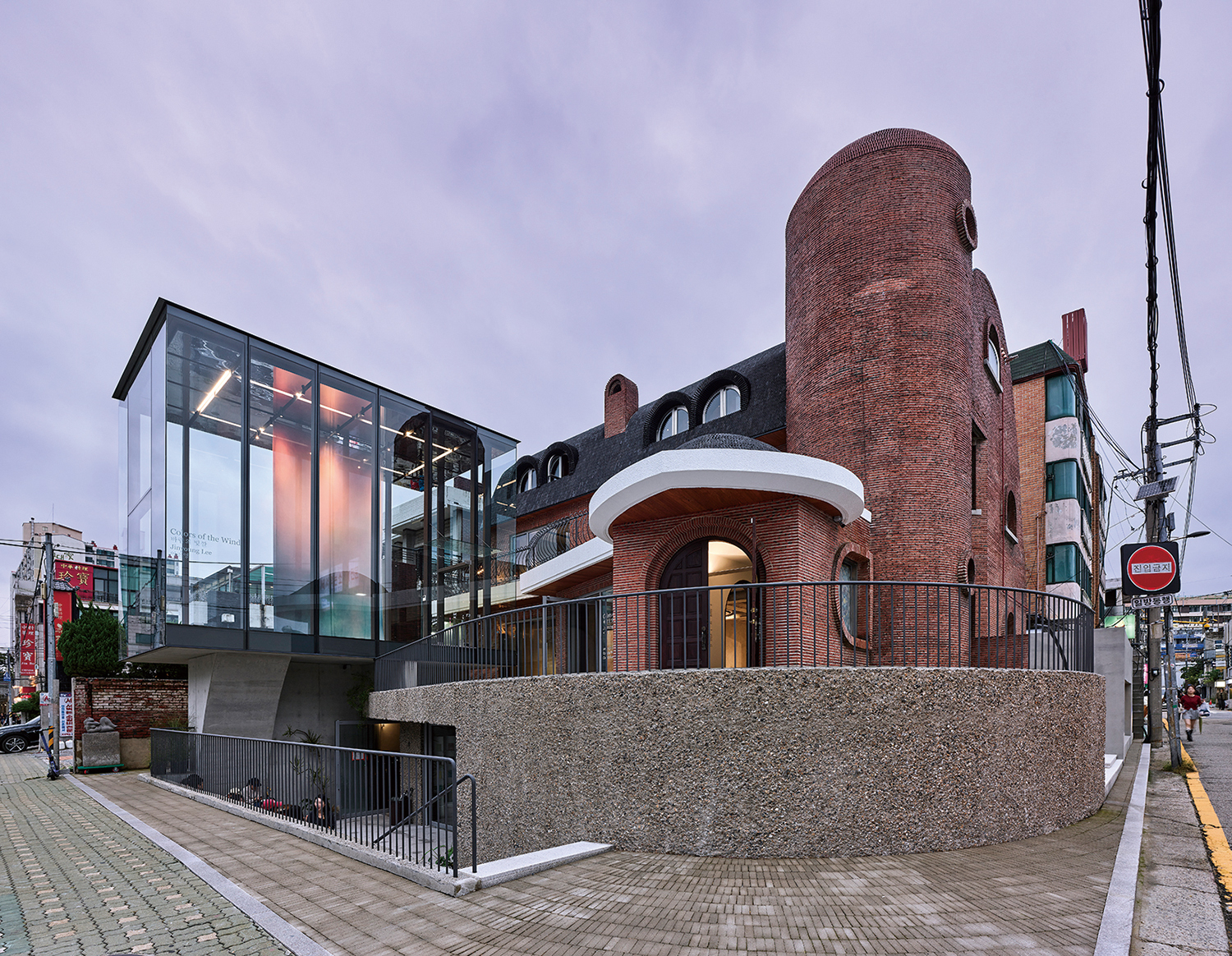
Overall view of JUNGEUM SPACE ©Kim Yongkwan
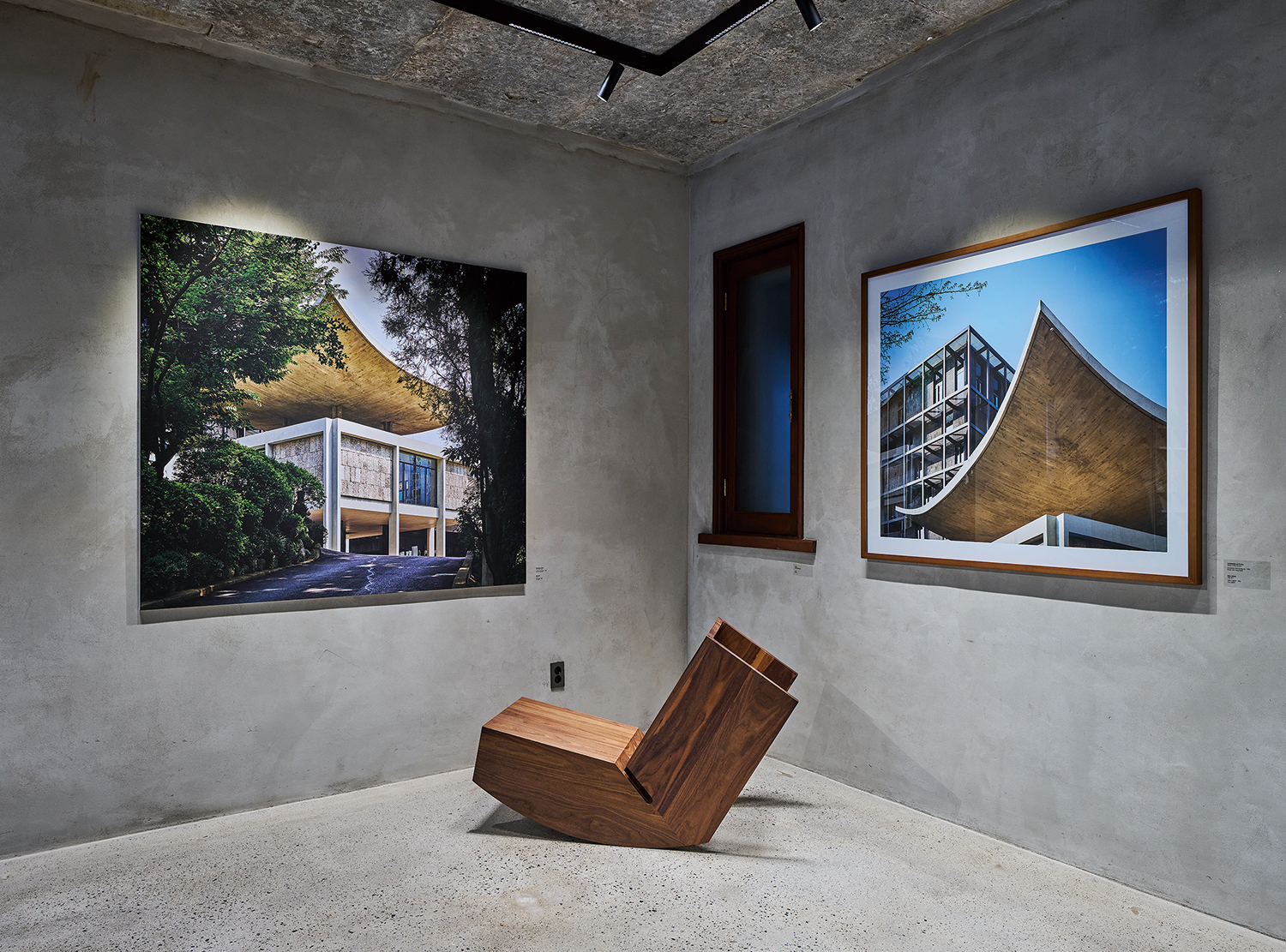
Exhibition view of ‘A Conversation: Kim Chung-up—Le Corbusier’ at the first floor. ©Kim Yongkwan
The exhibition, ‘A Conversation: Kim Chung-up—Le Corbusier’, which reexamines the architecture of Kim Chung-up through his relationship with Le Corbusier, is currently on view at both JUNGEUM SPACE in yeonhui-dong and the French Embassy in Korea. Opening on Nov. 6 2025, the exhibition displays the architectural photographs of works by two architects, captured by contemporary architectural photographers Kim Yongkwan and Manuel Bougot.
Based on the experience of the new construction and renovation of the French Embassy in Korea (2023, covered in SPACE, No. 671) with Cho Minsuk (Principal, MASS STUDIES), Yoon Taehoon (Principal, SATHY), a Korean-French architect, organised this exhibition. In the exhibition, he wanted to document the present conditions of Kim Chung-up’s architecture and to illustrate the cultural bonds between Korea and France, as a celebration of the 140th anniversary of diplomatic relations between the two countries in 2026.
The fateful encounter between two architects takes us back to the International Conference of Artists in Venice in 1952. In the same year, Kim Chung-up joined Le Corbusier’s atelier, where he gained hands-on professional experience until 1955. At the time, Le Corbusier had moved beyond his earlier advocacy of machine aesthetics and was increasingly engaged with exposed concrete and metaphorical form-making. The lessons absorbed during this period became a crucial foundation for Kim Chung-up’s development of a distinctive organic architectural language after his return to Korea. The French Embassy in Korea, completed in 1962, is cited as a representative work that demonstrates the culmination of these experiences.
JUNGEUM SPACE, one of the main venues for the exhibition, is itself a key work on display. The exhibition space was originally designed by Kim Chung-up as a residence for Jang Seokung, but later restored and remodeled as a cultural complex. Since its completion as a private residence, the house underwent multiple extensions and changes of use over more than four decades. In 2025, it was reopened to the public with a new first-floor extension and a major renovation that revived the original structural logic and proportions of his design. Archival materials used during the restoration process are also presented as part of the exhibition. Furniture works by designer Bahk Jong Sun are placed between the photographs, echoing the unique spatial rhythm of the former residence and reinforcing the domestic character of the exhibition space.
Rather than reconstructing original drawings or nostalgically revisiting the moment of completion, the exhibition focuses on documenting the present condition of an architecture shaped by time. Many of Kim Chung-up’s major works, such as the Administrative Building (now a College of Humanities) of Pusan National University (1959), the Jinju Cultural Center (now Gyeongnam Culture & Art Center, 1988), the Dr. Seo’s Clinic (now Arium Office Building, 1967), and the House of the Sun (now Sun Plaza, 1982), have been substantially altered, making it difficult to secure a sense of their original form. Architectural photographer Kim Yongkwan chose to photograph ‘the state in which they exist today’, emphasising the traces of transformation and damage. One notable highlight of the exhibition is the first public presentation on the current state of the Naval Officers’ Residence in Jinhae. For a decade, this military facility had been closed to external photography, only few black-and-white images from its completion have served as visual evidence if its existence. Newly commissioned photographs taken by Kim Yongkwan for this exhibition now offer a rare glimpse into its present condition.
On the other hand, the architectural works of Le Corbusier are presented through Manuel Bougot and his long-term
photographic series on Chandigarh (1951 ‒ 1966) in India. Chandigarh is one of the projects that Kim Chung-up participated in during his time at Le Corbusier’s atelier (1952 ‒ 1955). The architectural parallels between Kim Chung-up and Le Corbusier’s, such as the use of pilots, roof forms, rhythmic facades, and organic geometries, can be clearly read through the photographs. The exhibition at the French Embassy in Korea is not open to the public, while the exhibition at JUNGEUM SPACE runs until Feb. 28.