
SPACE January 2026 (No. 698)
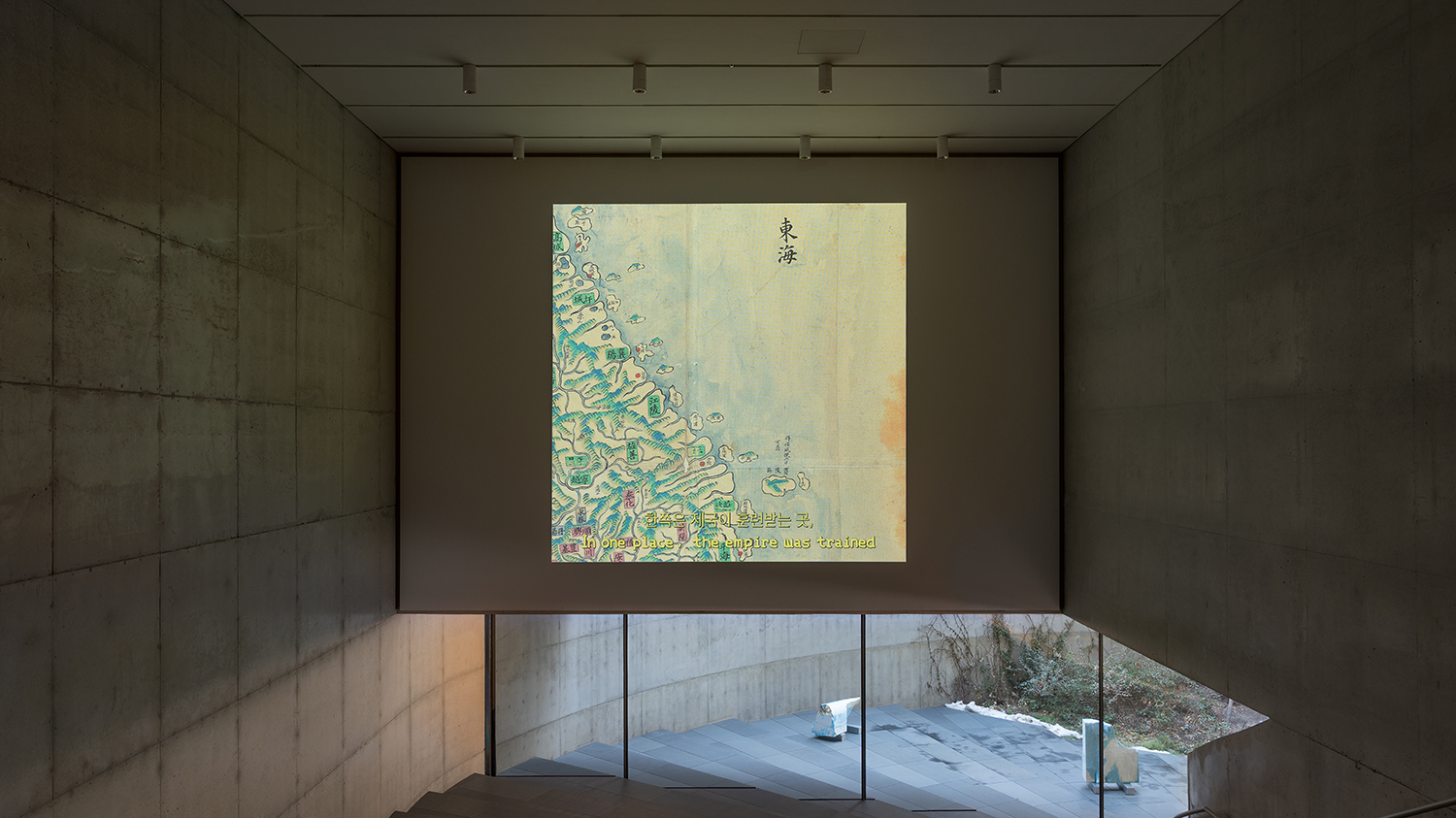
Exhibition view of the auditorium ©STUDIO JAYBEE / Image courtesy of SONGEUN Art and Cultural Foundation and the Artist
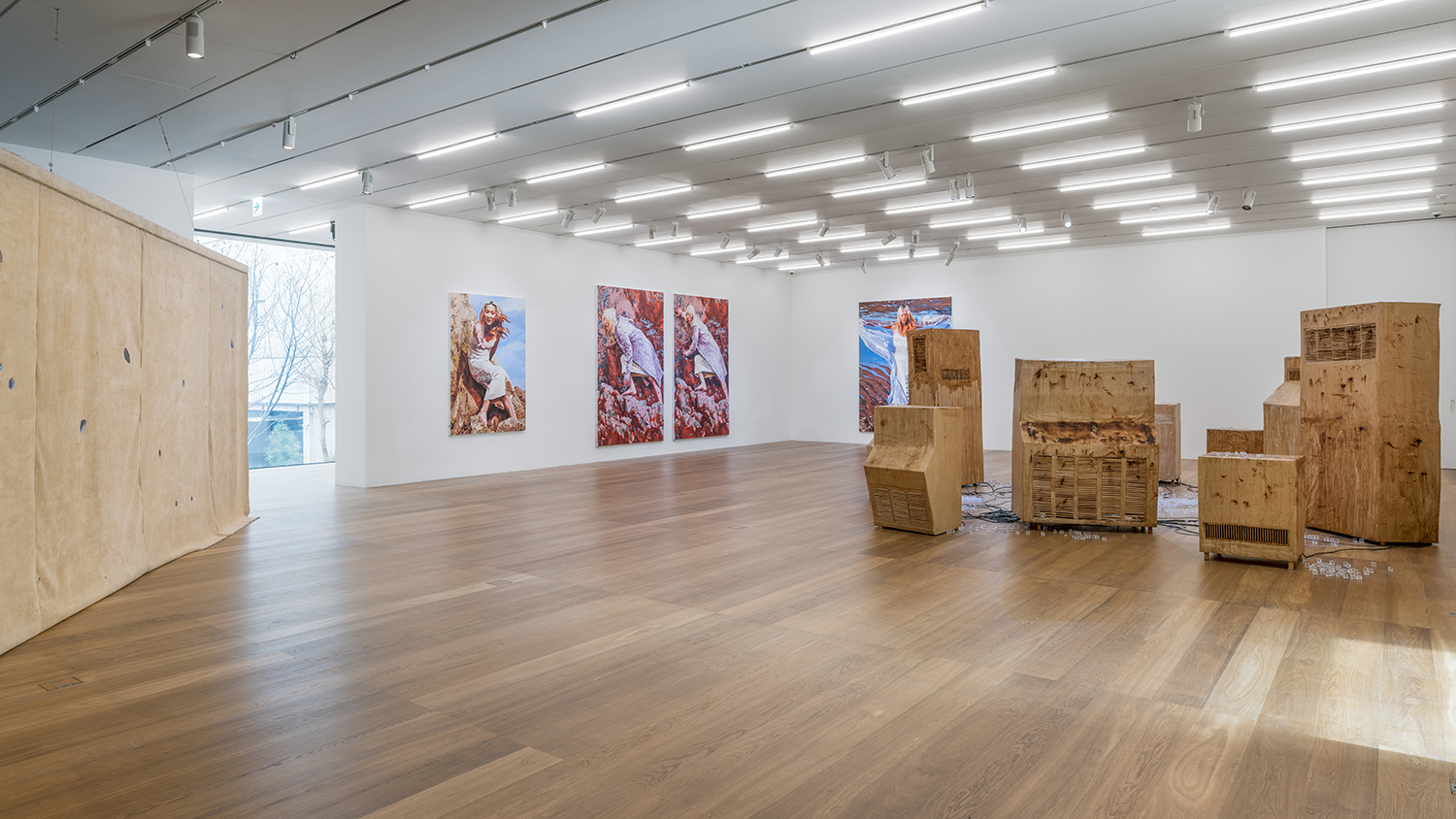
Exhibition view of the second floor ©STUDIO JAYBEE / Image courtesy of SONGEUN Art and Cultural Foundation and the Artist
The 25th SONGEUN Art Award, hosted by the SONGEUN Art and Cultural Foundation, has been on show since Dec. 12, 2025. Featuring newly commissioned works by 20 finalists selected through an open call held last year, the exhibition presents the practices of Bigo, Bomroya, Choi Taehoon, Goyoson, Jeong Kahee, Kim Hansaem, Kim Juwon, Kim Minjung, Kim Muyeong, Ko Youngchan, Kwon Hyun Bhin, Lee Aram, Lee Jinhyung, Lee Sooji, Lee Sungjae, Ryou Yo-E, Shin Min, Woo Jeongsu, Yoon Miryu, Yun Jeong-ui (in alphabetical order).
The exhibition offers a glimpse into the work of these emerging Korean artists spotlighted by SONGEUN. Upon entering the first floor lobby, visitors are greeted by Lady Sawn in Half (2025) by Kim Muyeong. This work, inspired by a stage magic trick, reflects the artist’s experience of measuring the body of a transgender friend, translating the sensation of incision into material form. Layers of stone powder, commonly used in women’s cosmetics, are built up on leather, amplifying the latent violence embedded in illusion through an exaggerated tactile surface.
The circulation leading to the second floor opens into an open screening space, where Lee Aram’s video work Every Worm Trampled Is a Star (2025) is presented. This work, shot at the former U.S. military base in Yongsan, Seoul, tracks the displaced memories embedded in land. By revealing the concealed histories of colonisation, occupation, demolition, and development, the artist castes light in the deep separation and loss between land and the people who inhabit it.
Another noteworthy piece, SERV-ICE (2025) by Shin Min stands at the centre of the second floor gallery. Based on the artist’s own experience the service industry, she has consistently critiqued the realities of female labour and the structural inequalities of capitalism through everyday materials such as paper and French fries sacks. In this installation, portraits of workers are projected inside ice machines and arranged like a choir. The installation metaphorically addresses the individual’s anonymity within industrial systems while simultaneously suggesting the possibility of solidarity among service workers.
The corridor leads to the third floor which features video and installation works by Ko Youngchan, who reconstructs site-specific narratives through research into folklore, oral testimony, fantasy, and myth. Grounded in his methodological framework of ‘history from below’, the works draw subterranean narratives from the geological context of catacombs. Upon entering the third-floor gallery, visitors encounter Goyoson’s Son Shinhwa, Carved Celebration (2025), a critical reflection on industrialized Korean wedding culture. Inspired by his sister’s wedding, the artist assembles food carvings, invitations, and wedding photographs into a staged celebratory scene. After the exhibition, this installation will be transformed into actual wedding components. In this sense, the gallery is functioning as a rehearsal studio for an upcoming ceremony.
The exhibition extends down into the second basement level, where video works are predominant. Among them, Jeong Kahee’s 404 (2025) investigates emotional collapse of individuals in ‘digital comfort system’, and critiques how technology commodifies human emotions. Kim Juwon’s Death of Solomon Grundy: Sunday (2025) juxtaposes a home video from maternal grandfather’s 70th birthday in 1983 with footage of his grandmother’s grave relocation in 2023, poetically revealing the interweaving of birth and death, commemoration and farewell. Meanwhile, Choi Taehoon continues his sculptural practice using spray polyurethane foam, an industrial material that enables chance-driven and autonomous forms. His new work Guardian (2025) visualises a collaboration between non-human objects typically unrecognisable in creative environments and the body. To be more specific, artist intervened in the moment of the foam’s curing process through gestures such as unfolding tables or moving handcarts.
While diverse in theme and form, the works presented in this exhibition are loosely connected by their shared logical processes that pass-through conditions of the body, memory, labour, institutions, technology, and materiality. The announcement and award ceremony for the grand prize recipient will take place in January, and the exhibition remains on view until Feb. 14.