
SPACE February 2026 (No. 699)
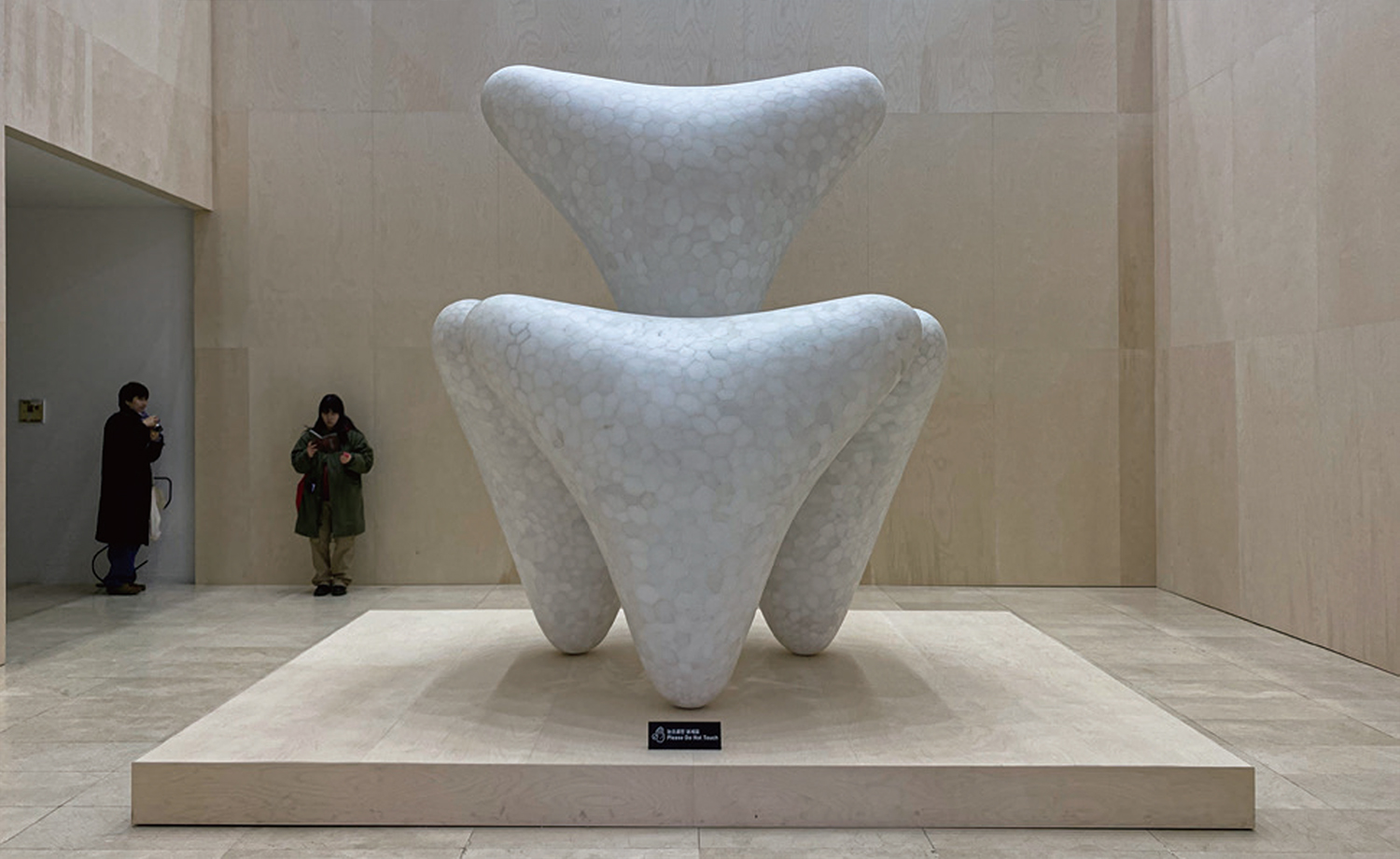
Installation view of Lucy (2007) ©Kim Hyerin
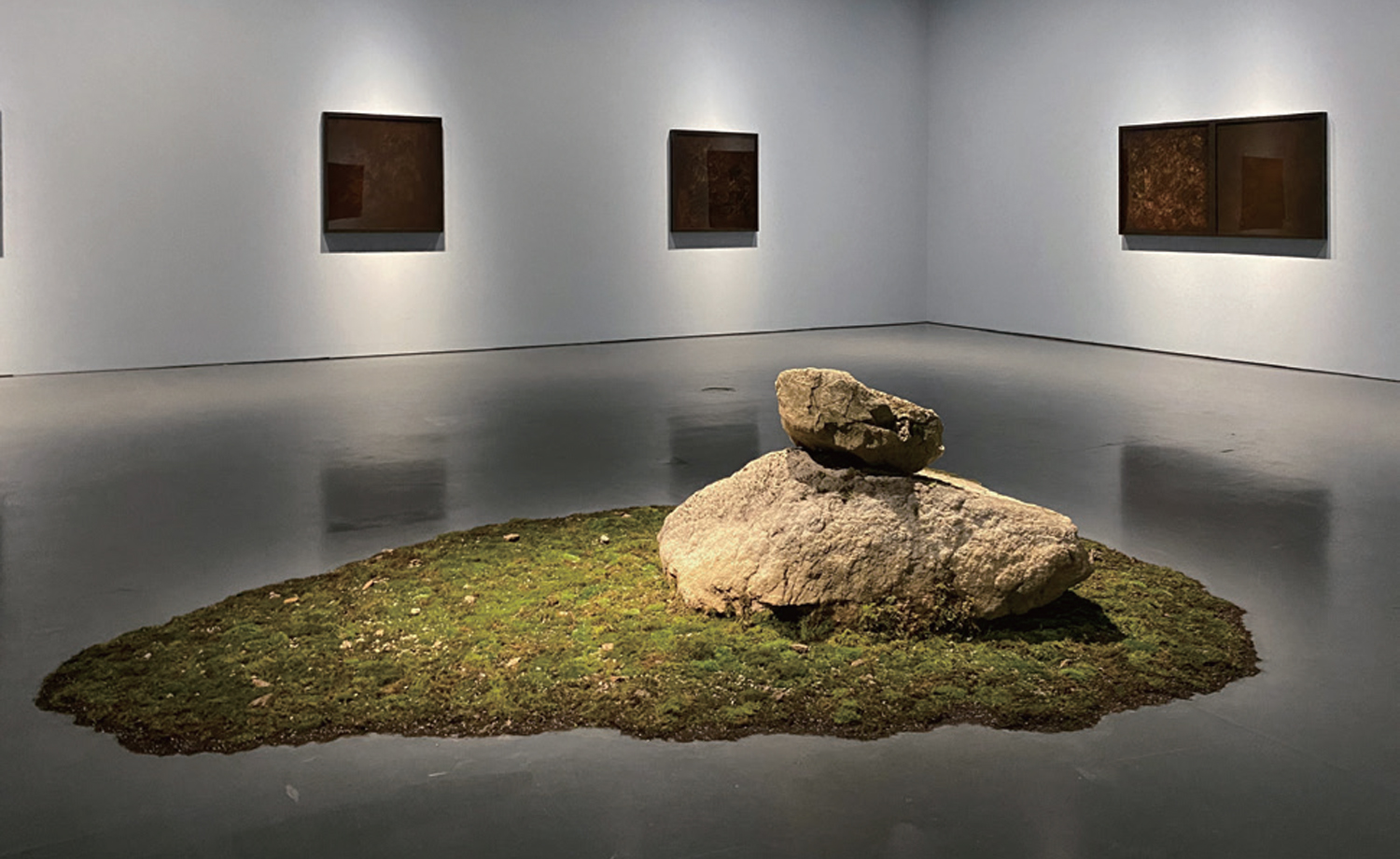
‘Microcosmos’ section, foreground work Stone that Learned to Breathe (2025) ©Kim Hyerin
The exhibition ‘Jae-Eun Choi: Where Beings Be’, which proposes a shift away from anthropocentric thinking toward ecological and planetary modes of thought, opened on Dec. 23 at the Seosomun Main Branch of the Seoul Museum of Art (SeMA). Born in 1953, Jae-Eun Choi is an artist who has explored the relationship between life and nature from the forefront of contemporary art, working across sculpture, video, installation, and architecture. The Korean exhibition title, ‘Yak-sok’ (promise)—is presented not merely as a linguistic concept, but as a reminder of the interdependent solidarity of nature that has traversed time and space since before the advent of civilization. The exhibition unfolds through five thematic sections: ‘Lucy’, ‘Tolling Bell’, ‘Microcosmos’, ‘Names of the Unseen’, and ‘Nature Rules’. At the entrance to the exhibition stands the sculptural work Lucy (2007), inspired by the fossil known as Lucy, which was believed at the time of its discovery in 1974 to be the ‘earliest human ancestor’. Composed of hexagonal units—considered the most complete form in cellular geometry—carved from Himalayan white jade and assembled into a structure resembling a female pelvis, the work evokes reflections on the origins of humankind. In the section titled ‘Tolling Bell’, the exhibition presents the Horizon of the Unanswered (2025) series alongside John Donne’s poem For Whom the Bell Tolls. A video work projects real-time sea surface temperatures from around the world onto an image of a blackened ocean, while images of coral bleaching caused by anomalously high sea temperatures in the waters off Okinawa are shown together with an installation of bleached coral. These works sound an alarm by presenting, through visually arresting beauty, the reality that has emerged from humanity’s indifference and neglect. ‘Microcosmos’ introduces a body of works that investigate the microscopic worlds existing within and beneath the earth. World Underground Project (Karuizawa) (1991 ‒ 1992), initiated in Gyeongju in 1986, involved burying sheets of washi paper in soils across Japan, the U.S., Europe, Africa, and other regions, and later excavating them to reveal patterns formed by the earth itself, which were then fixed with acrylic resin. Though born underground, these darkly luminous works resemble fragments of the cosmos captured in material form. Cycle (2007) documents the earlier works through microscopic photography, revealing traces of growth among cellular organisms and demonstrating that an order of circulation exists even at the smallest scales of life. At the centre of the gallery rests Stone that Learned to Breathe (2025). Layers of lichen and moss that have settled on the rock over time accumulate and spread, forming a topography that embodies the passage and sedimentation of time.
In contrast, ‘Names of the Unseen’ focuses attention on small and seemingly insignificant forms of life. When We First Met (2025) presents pressed specimens of wildflowers and grasses collected by the artist in everyday life, accompanied by research into their names, origins, and histories. Flowing through the space alongside this work is the sound installation To Call by Name (2025), in which the names of representative species that have gone extinct since the Industrial Revolution are recited aloud.
The exhibition culminates in ‘Nature Rules’, which introduces Choi’s long-term projects centred on the Demilitarized Zone (DMZ), for which she is widely known. Initiated in 2014, the ‘Dreaming of Earth’ project developed into a proposal to construct elevated walkways connecting the northern and southern areas within the Cheorwon region of the DMZ, incorporating sky gardens, pavilions, and towers, as well as seed and knowledge repositories inside the Fourth Tunnel in Cheorwon. In this exhibition, archival videos present proposals by 18 collaborators from diverse fields ‒ including architects such as Ban Shigeru, Seung H-Sang, and Cho Minsuk, as well as experts in art, ecology, technology, and anthropology ‒ who participated in the project. Also on view are materials from ‘Nature Rules’ (2020 ‒ ongoing), an expanded long-term project that includes the ‘DMZ’s Ecological Status Map’, which analyses the current ecological conditions of the DMZ, along with concrete manuals for forest restoration and seed samples representing more than thirty plant species used in seed bombs. The exhibition runs through Apr. 5.