
SPACE January 2026 (No. 698)
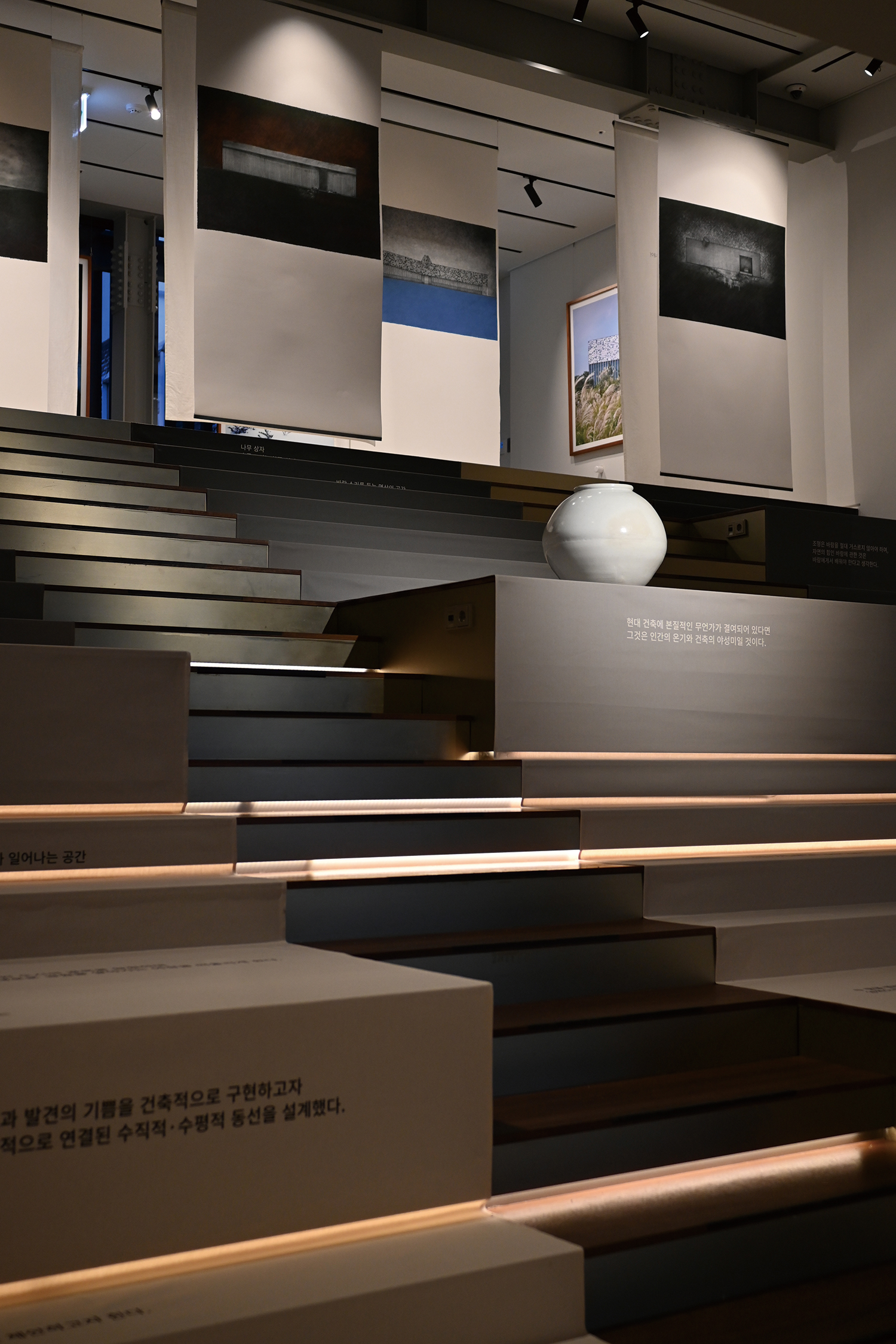
Exhibition view of ‘2000: Architect ITAMI JUN and YOO EHWA’. Images courtesy of ITAMI JUN Architecture & Culture Foundation
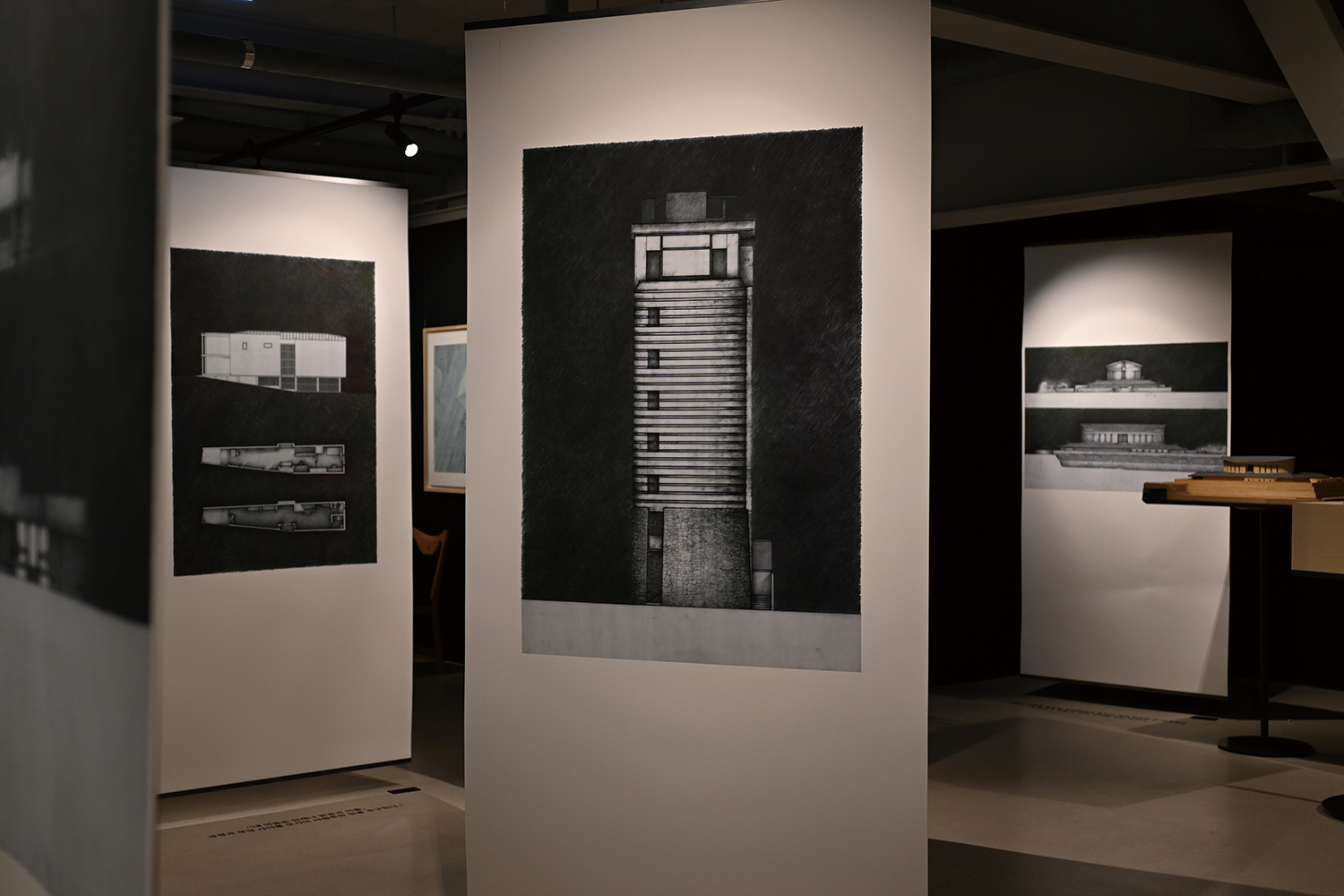
Exhibition view of ‘1990–1970: Architect ITAMI JUN’. Images courtesy of ITAMI JUN Architecture & Culture Foundation
On Dec. 6, the exhibition ‘Architecture of the Wind: Traces of Breath’ opened at FEZH (2023) in Hannam-dong. As the first curated exhibition to simultaneously spotlight Itami Jun and Yoo Ehwa (Principal, ITM YooEhwa Architects), the exhibition adopts an unusual, time-reversing structure that aligns closely with the organic circulation of FEZH, a building designed by Yoo Ihwa herself.
The first theme, ‘2020: Architect YOO EHWA’ is presented on one side of the gallery’s first floor. Through architectural models, drawings, sketches, and video works, the exhibition introduces Yoo Ihwa’s major projects, including the ITAMI JUN Museum (2022, covered in SPACE No. 665), FEZH, Sihojae (2023, covered in SPACE No. 674), and Voice of Heaven (2023, covered in SPACE No. 674), illuminating her distinctive architectural language. Fabric panels fluttering across the gallery visually evoke the notion of an ‘architecture of wind.’ One particularly striking feature is a caption from architectural critic Chang Yongsoon (Professor, Hongik University): ‘Where Itami Jun was informed by the resonance or vibrations produced by the monolithic space that he finally reached, Yoo Ehwa transforms any such vibrations into a flow’ (covered in SPACE No. 674, FRAME section). Similarly, the first theme focuses on how Itami Jun’s legacy has evolved in Yoo Ihwa’s hands.
The second theme, ‘2000: Architect ITAMI JUN and YOO EHWA’ examines the 2000s, when the two architects – father and daughter, mentor and junior – worked in close dialogue. Featured projects include Itami Jun’s major works in Jeju, such as the Three Art Museums: Water, Wind and Stone (2006, covered in SPACE No. 458) and Church of Sky (2009), as well as projects across Korea, including Oboe Hills in Pyeongchangdong (2010) and the Gyeongju Expo contest entry (2004). Spanning both the first and second floors, this section leads visitors up a staircase inscribed with quotations from the two architects. The ascent suggests that while Yoo Ihwa’s architecture is deeply connected to Itami Jun’s philosophy, it is simultaneously moving ahead along a path that is distinctly her own.
The third theme, ‘1990–1970: Architect ITAMI JUN’, is staged as a black box in deliberate contrast to the preceding spaces, evoking motifs closely associated with him, such as ‘ink’ and ‘shadow’. During Japan’s bubble economy, when many architects favoured luxurious marble finishes, Itami Jun instead unified his material palette in darker tones, intending for each material to reveal its unique qualities when touched by natural light. Visitors walk alongside drawings from his early works – including PODO Hotel (2001), Hermitage of Ink (1998), House of Marginal SpaceⅡ(1981), India Ink House (1975), and Mother’s House (1971) – and upon turning around, encounter photographs of the completed buildings. Fabrics suspended throughout the space display drawings on one side, aligned with the direction of movement, and photographs on the reverse, metaphorically tracing the transformation of architectural conception into built reality. In addition to architectural works, the exhibition presents films shot by Itami Jun during his lifetime, a range of artworks, and a series of chairs, revealing the breadth of his engagements with artists – including those associated with Mono-ha – in his early career. Through these examples, the exhibition illustrates how these encounters informed his pursuit of a design essence and the formation of his singular originality.
After passing through a screening room featuring footage drawn from the documentary The Sea of Itami Jun (2019), directed by Jung Dawoon (Co-Principal, Giraffe Pictures), visitors finally arrive at the fourth theme, ‘Beyond Time: Architecture of the Wind’, which is the meditation room on the fourth floor. Here, the landscapes and sounds of the Water, Wind, Stone Art Museum are projected within a circular space, offering a direct, sensory experience of the ‘architecture of wind’ that flows from Itami Jun to Yoo Ihwa. The exhibition will be on show until Jan. 18, 2026.