




SPACE January 2026 (No. 698)
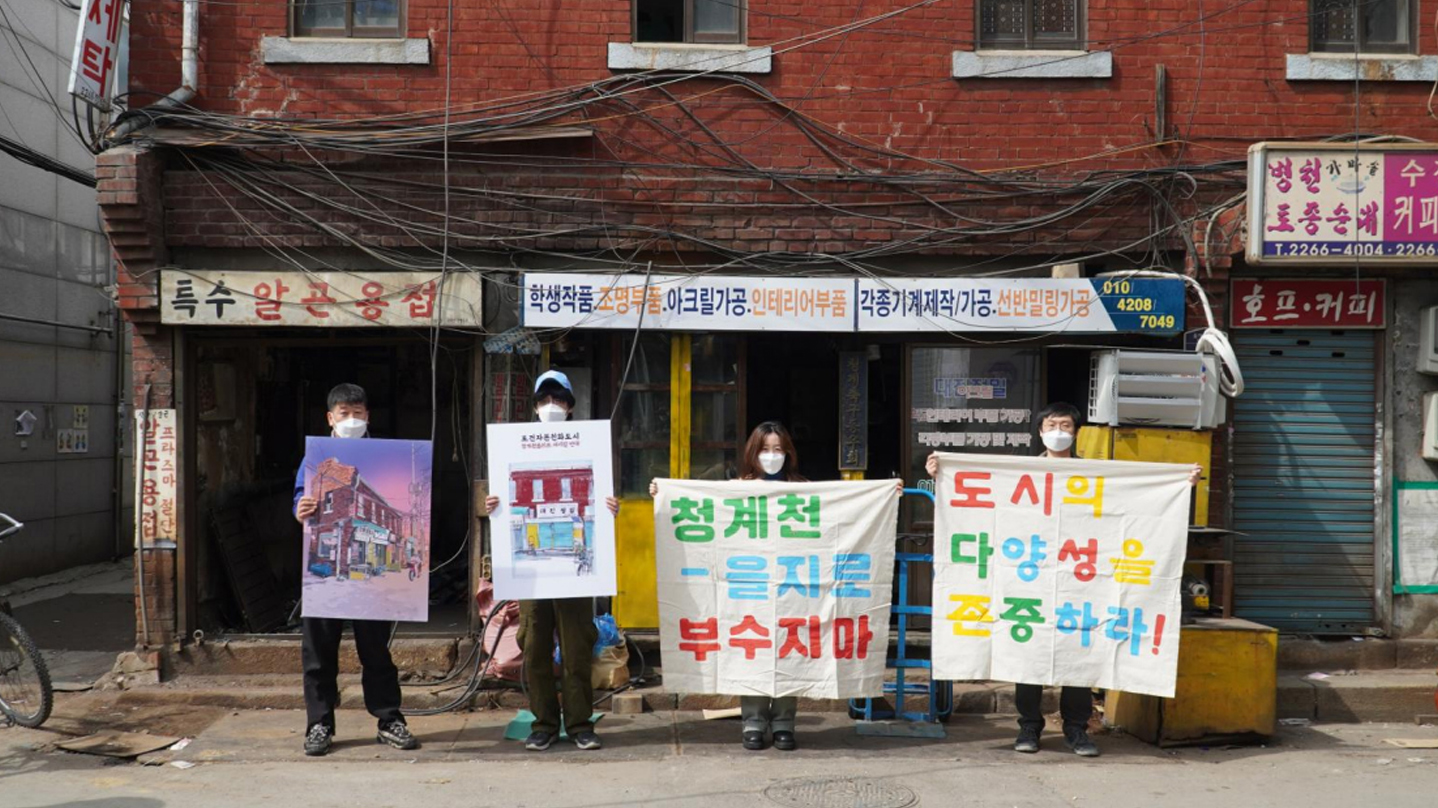
Excerpt from the CHEONGGYECHEON ANTI-GENTRIFICATION ALLIANCE’s presentation materials. Image courtesy of CHEONGGYECHEON ANTI-GENTRIFICATION ALLIANCE
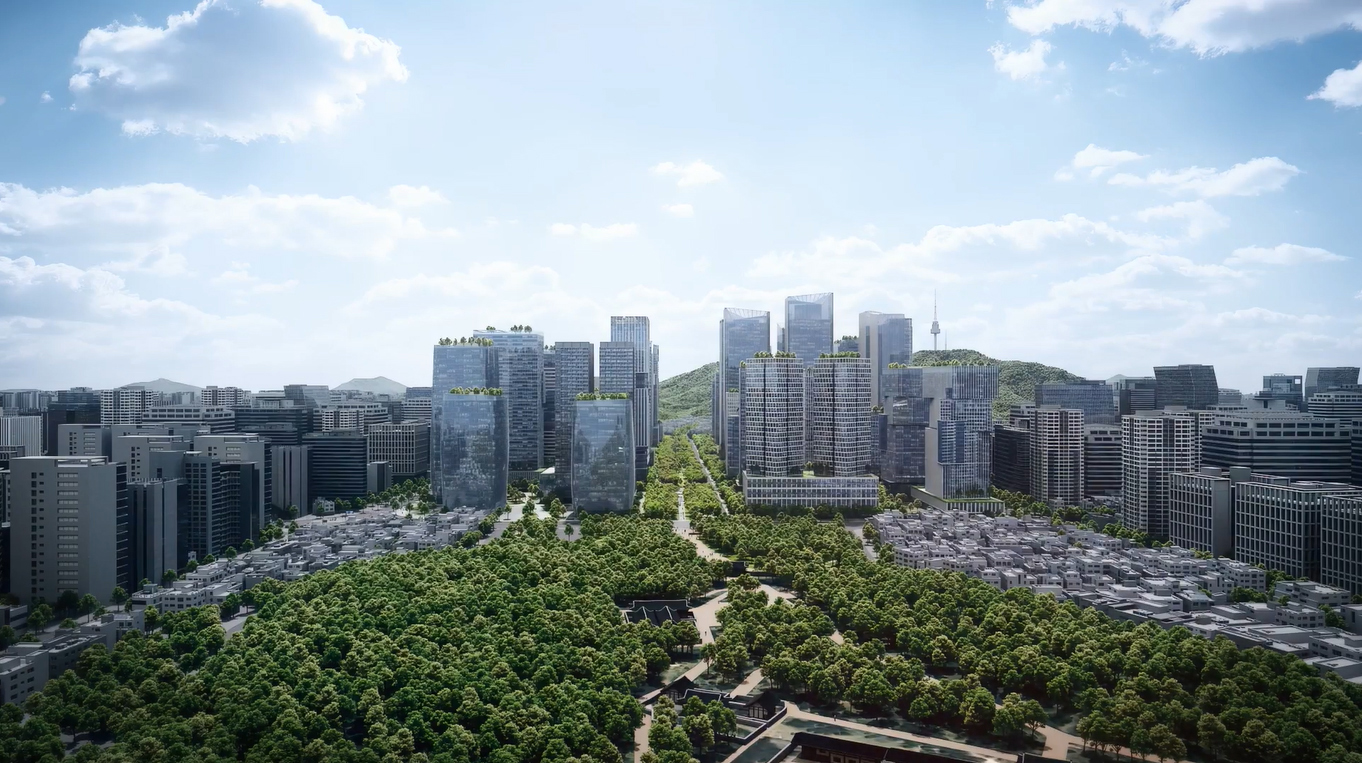
Aerial view from the promotional video for the Sewoon District Redevelopment Project released by the Seoul Metropolitan Government on Nov. 18, 2025. Screenshot from Seoul Metropolitan Government’s website
On Oct. 30, 2025, Seoul Metropolitan Government (SMG) announced revised building height regulations for Sewoon District 4 located directly across from Jongmyo Shrine. As part of a high-rise redevelopment, the revised plan relaxed the building height restriction on the Jongno-facing side from 55m to 98.7m, and on the Cheonggyecheon Stream-facing side from 71.9m to 141.9m. This decision immediately sparked concerns, including fears for Jongmyo Shrine’s de-designation as a UNESCO World Heritage Site. In such exigent circumstances, on Nov. 26, a public forum was organised to bring together architectural professionals and non-government organisations. The forum titled ‘Emergency Discussion Meeting on the Sewoon District 4 Reorganisation (Redevelopment) Promotion Project’ was co-hosted by eleven National Assembly members. The event was moderated by Lee Wonjae (Chairperson of the Executive Committee, Cultural Action) and proceeded from keynote presentations to discussion.
The first presentation by Kim Jonghun (Professor, Pai Chai University) began by tracing the historical layers of Jongno and the Sewoon Sangga area. Kim underscored the value of the district’s dual urban structure; a modern road system which coexists with an organic urban fabric. He asserted that it is important to understand not only Jongmyo Shrine itself but also the whole palace region, consisting of the five major royal palaces, shapes the historic landscape and urban identity. According to Kim, it is necessary to move beyond the binary opposition between development and preservation and to undertake a fundamental reconfiguration of our legal and institutional frameworks in order to establish a future-oriented notions of cultural heritage. This line of argument was further developed in the subsequent presentation by Kim Incheurl (Principal, Archium). By describing Jongmyo Shrine as a symbolic site that encapsulates the essence of Korean architecture, he pointed out an insufficient discussion of the ‘landscape’. Often attention has been paid to views toward Jongmyo Shrine, while the landscape as seen from the shrine is neglected. Kim also criticised the reversed role between administrative figures such as the mayor and architects or urban planners, and the limitations of master plans produced without sufficient social consensus. Lastly, he highlighted a need for more substantive approaches, including the unification of urban management and heritage protection systems. The final presentation was given by Park Eunseon (Director, Listen to the City) and Ahn Kunchul (industrial heritage archivist) from CHEONGGYECHEON ANTI-GENTRIFICATION ALLIANCE. They introduced themselves as individuals who had submitted formal petitions to UNESCO three times (in 2021, 2023, and 2025). The group focused on the direction of the Sewoon District development which consistently and dramatically changed over the successive mayoral terms and drew attention to the urban heritage and historical layers lost in the process. Their critique extended beyond the controversial Sewoon District 4, currently at the centre of controversy over the potential withdrawal of its UNESCO World Heritage nomination. They also pointed to the broader failures of urban development projects across the Cheonggyecheon–Euljiro area. These projects, they argued, have disregarded the industrial and cultural potential of the area as a manufacturing cluster, instead carelessly pushing up the permitted floor area ratio from 600% to 900%, and eventually to 1,500%. In particular, they strongly criticised the fact that the urban regeneration plan, formulated in Mar. 2020, was effectively nullified following Mayor Oh Sehoon’s inauguration in 2022. That earlier plan had been the result of prolonged dialogue and consensus-building among the central government, the SMG, Junggu Office, political actors, and civil society, with explicit consideration given to measures for protecting the area’s manufacturing base. They called for a return to the consensus reached in 2020.
In the subsequent discussion, Kim Seon-Ah (Principal, SPACING architecture & urban planning), Ahn Changmo (Professor, Kyonggi University), Lee Jooyeon (architectural critic), Jung Keehwang (Research Director, CI·CI·HAN Lab) participated as panelists. They all agreed on the urgent need to halt high-rise development plans that threaten to erase both the historical urban ecosystem and the city’s industrial fabric. The event concluded with a shared call for greater alignment between academic insight and on-the-ground advocacy.
7