
SPACE December2025 (No. 697)
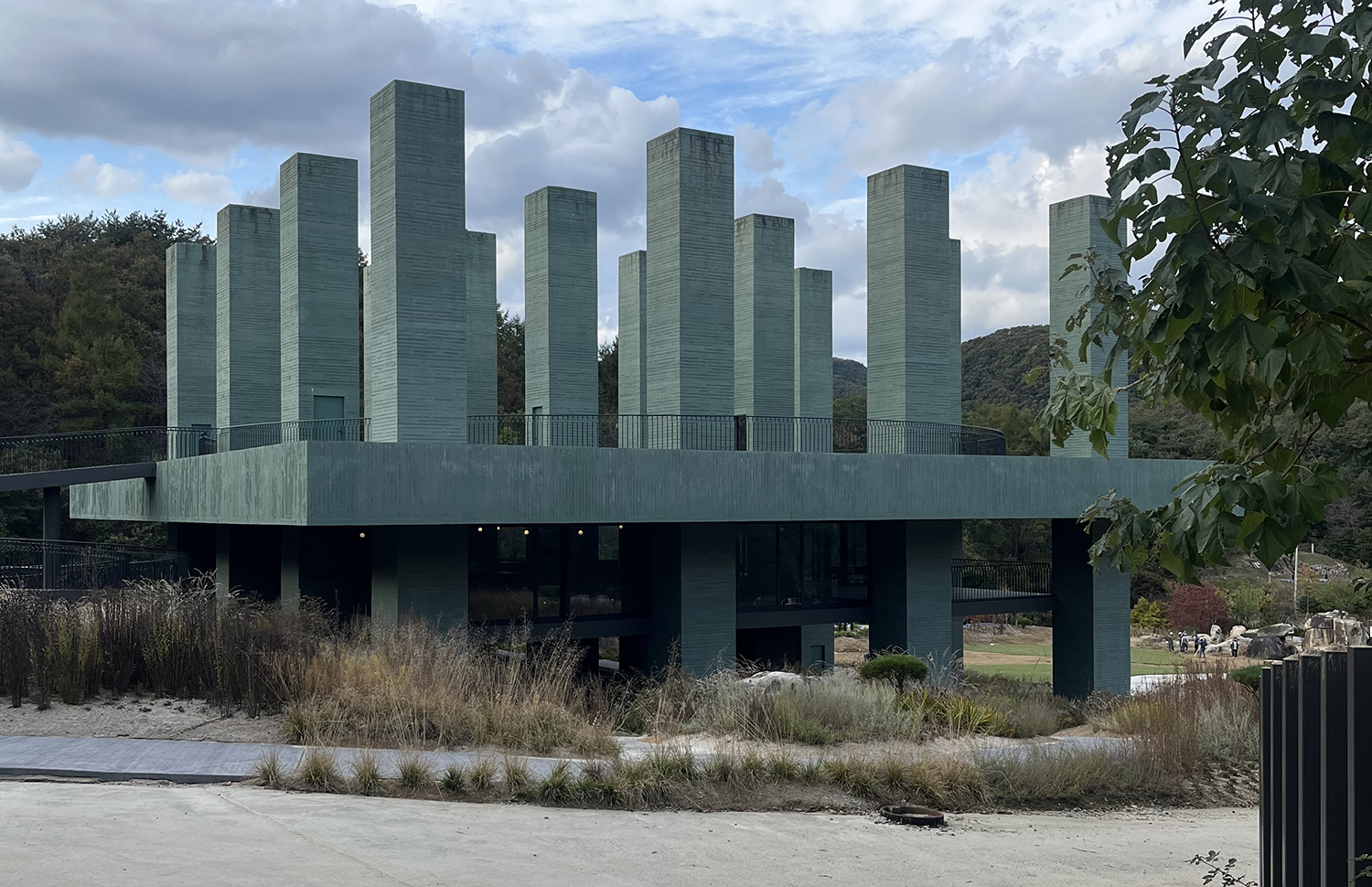
Exterior view of the Überhaus (2024) ©Park Jiyoun
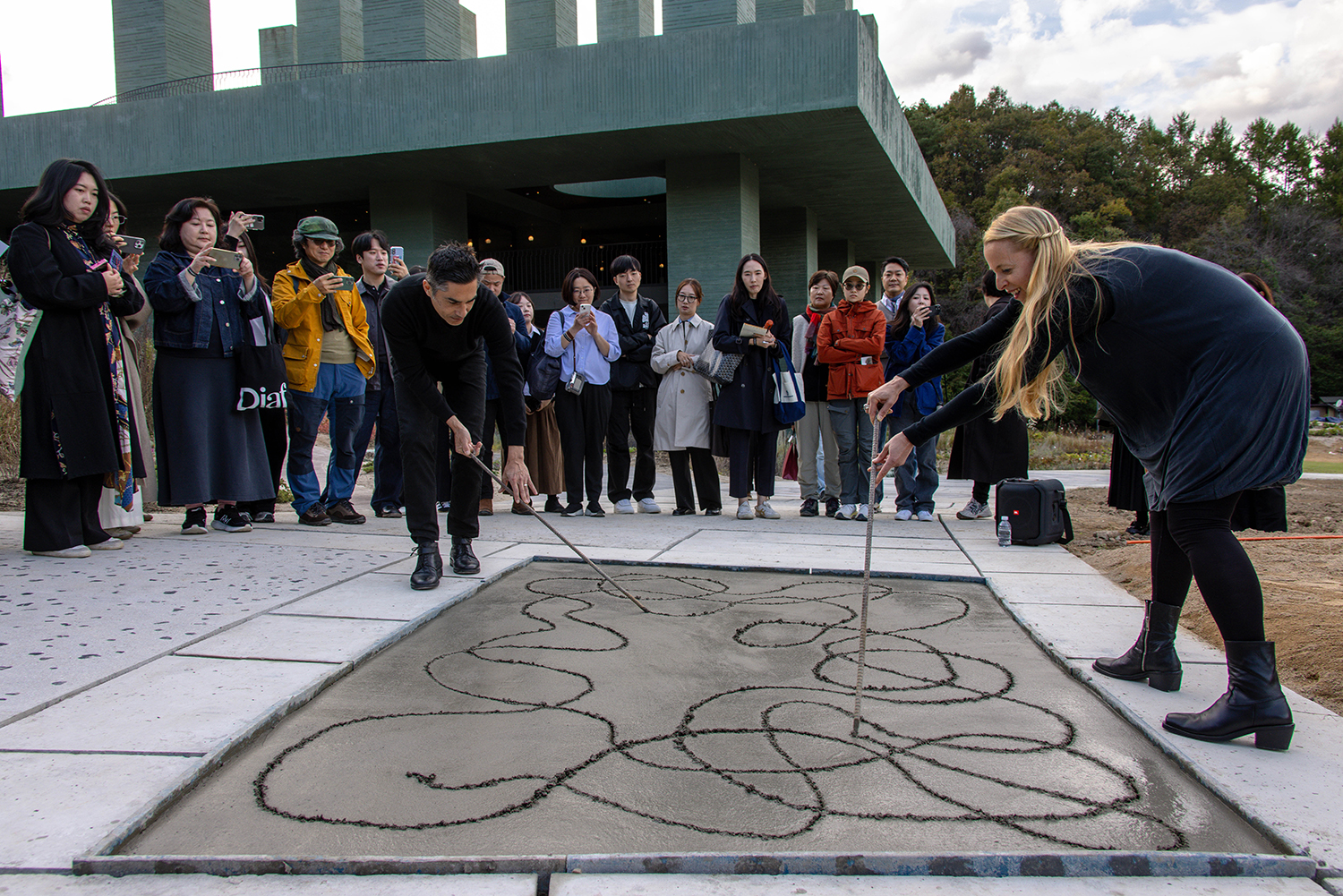
Performance view of Mauricio Pezo and Sofia von Ellrichshausen. Image courtesy of Medeonggol Garden
On Oct. 24, a lecture by Pezo von Ellrichshausen (co-principals, Mauricio Pezo, Sofia von Ellrichshausen, hereinafter Pezo) was held at the Medeonggol Garden in Gyeonggi-do, Yangpyeong. The Medeonggol Garden is a project composed of Korean and Western-style gardens along with multiple buildings by Pezo, Ensamble Studio (co-principals, Antón Garcia-Abril, Débora Mesa), and IROJE architects & planners (principal, Seung H-Sang). Since 2019, Pezo has been involved in projects of various scales, such as the Überhaus (2024) and Nietzsche’s Labyrinth (2024 –), to create the Medeonggol Garden logo, which have all now been completed or near completion. The lecture was part of a programme that offered the public a glimpse into parts of this ongoing project.
Pezo began by describing their architecture as ‘Second Nature’. While some think that cities themselves emerge naturally and thus can be considered nature, some view architecture and nature in a hierarchical or oppositional relationship. Pezo’s understanding of nature refers to a more general meaning of landscape, topography, and climate. Their idea of ‘Second Nature’ situates architecture and nature equally, seeking a distinctive sense and order from this relationship. For architects navigating dense layers of regulations and requirements in urban environments, such an idea may feel distant. However, for architects working in Chile, where the winds from the Andes, the vast Pacific coast, and the occasional earthquakes are immediate realities, this perspective emerges naturally.
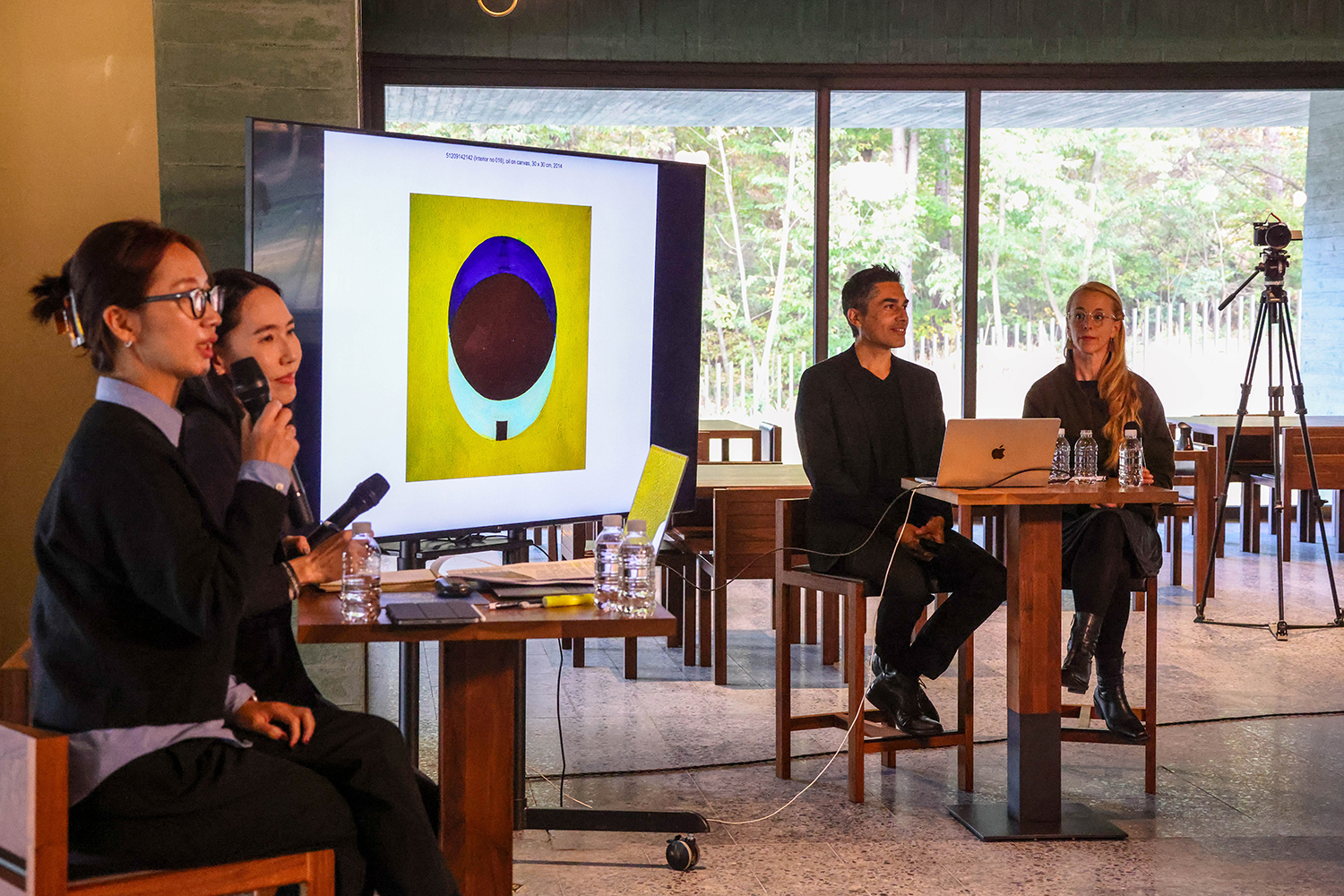
Talk view with Chung Dahyoung. Image courtesy of Medeonggol Garden
Pezo explores architecture itself, delving into the relationships between space and humans, space and spaces, and space and art, rather than framing architecture as a social product or within architectural-historical discourse. The drawings of previous occupants before renovation, the geometric order mediated by scale, and the paintings and sketches made during the project’s development all contribute to unfolding architecture’s own internal narratives. The geometric composition for which Pezo is known functions not as an aesthetic pursuit but as a means of forming relationships with specific subjects. The square column rising dramatically through the roof of Überhaus transcends its structural function to become an element of sensory and spiritual experience, while the circular void in INES (2021) varies in size at each level to connect spaces organically throughout the building.
Pezo also stressed the reciprocal relationship between architecture and drawing. Their architectural drawing and paintings serve as lenses to reexamine architecture, and as works of art at the same time. For example, in a series of paintings depicting various flowers, the process of layering and drying pigments evokes the cycle of blooming and withering, connecting artistic process with life itself. This reflection often forms the conceptual foundation of their architectural practice. Following the lecture, through the conversation between Pezo and Chung Dahyoung (co-director, CAC), the meaning of geometry and colour in their architectural philosophy, as well as the tension between autonomy and inevitability, was explored.