
SPACE October 2026 (No. 707)
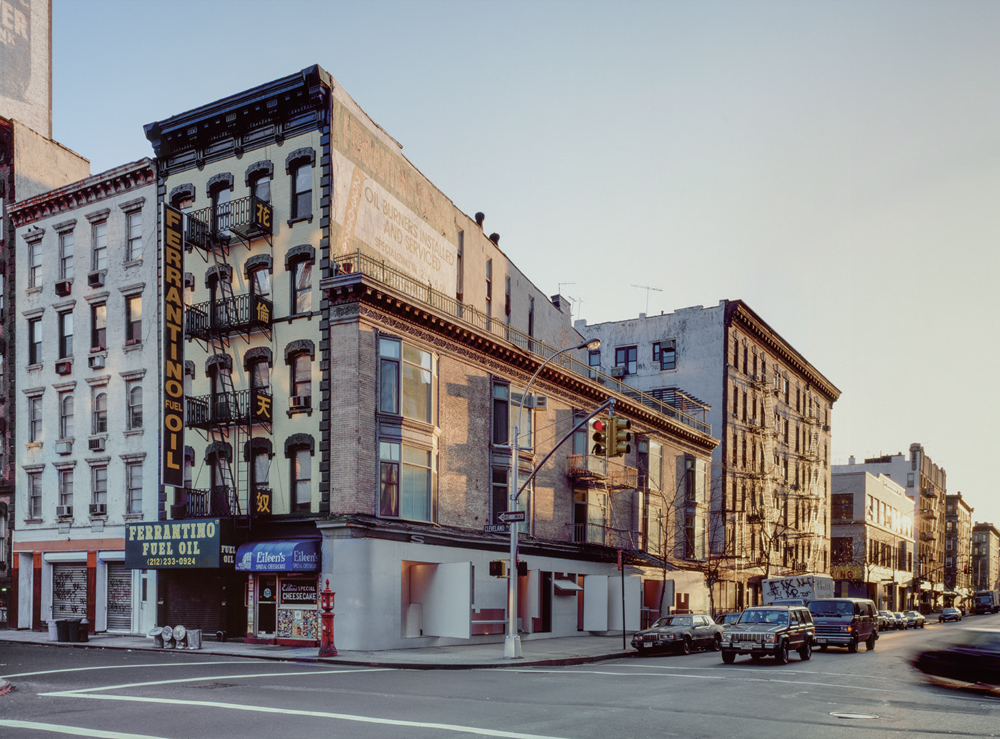
Park Kyong (1955‒) served as Co-Artistic Director of the Korean Pavilion at the 2023 Venice Biennale. It is less widely known that his career trajectory began more than forty years ago at StoreFront for Art and Architecture (hereinafter StoreFront).▼1 StoreFront, the alternative exhibition space in New York that Park, who trained in architecture, founded in his late twenties and led for sixteen years, was a dynamic laboratory for thinking about the city through architecture and raising social issues to the attention of public debate. The exhibitions and projects it presented through multilayered collaborations with architects, artists, and curators from around the world who were then beginning to gain recognition in the 1980s and 1990s came to be seen not as one-off events but as initiatives with wide social impact. In particular, the curatorial methodology Park developed at StoreFront carried into a series of international exhibitions and projects, offering an important way of understanding how architecture can intervene in urban realities and effect change through the medium of exhibitions. Having archived and studied this process, Eunjin Regina Shin (curator) and Yim Dongwoo (Professor, Hongik University) reconstruct the early history of Park and StoreFront in depth, examining the legacy this work has left to the field of architecture and the questions it continues to pose for us today.▼2 Editor
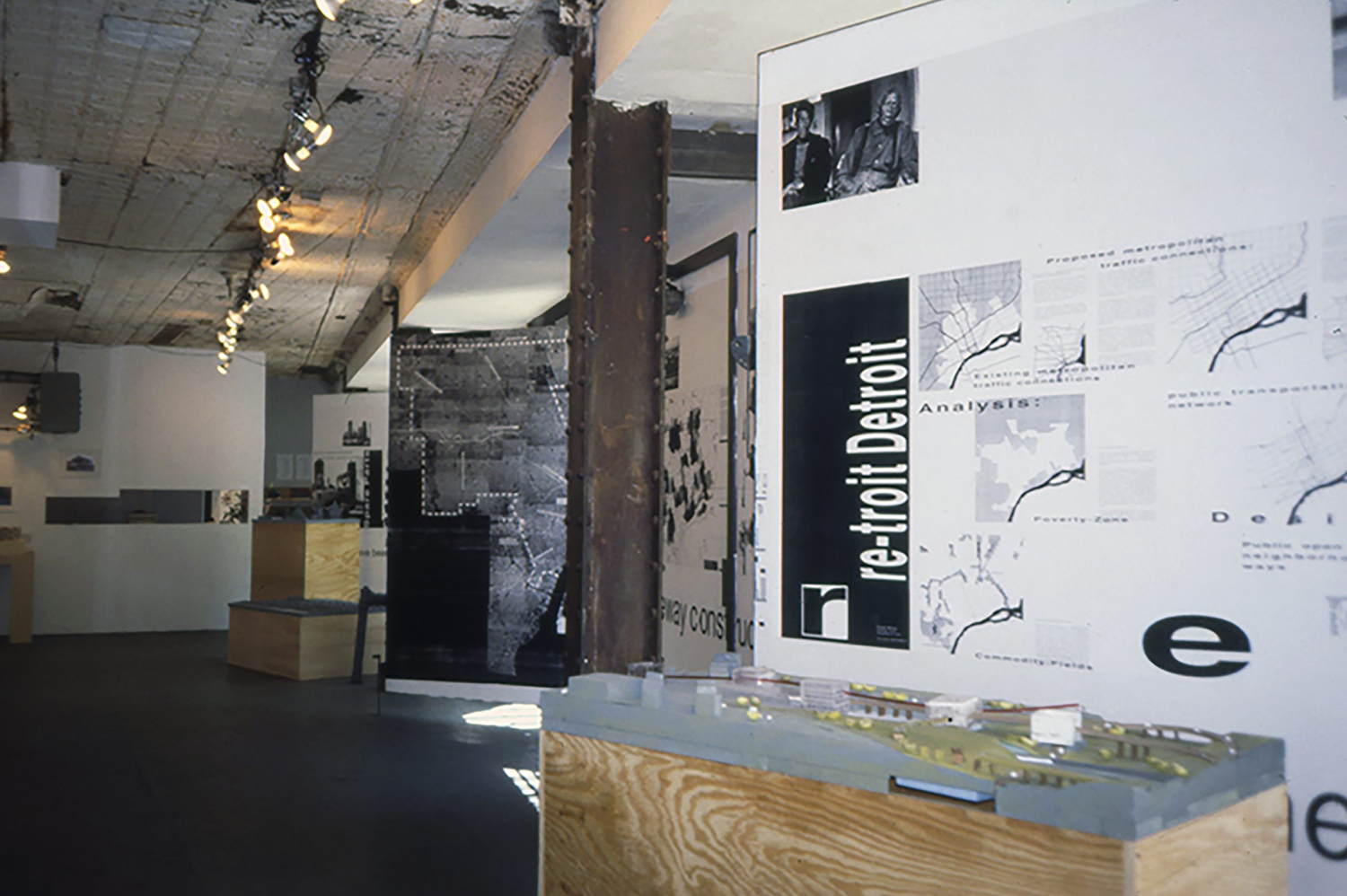
Installation view of ‘Detroit is Everywhere: Post-Urban Landscape’ (1995) at StoreFront for Art and Architecture / Image courtesy of Storefront for Art and Architecture
New York, where StoreFront began in 1982, was a city resistant to straightforward categorisation. The shock of the 1975 fiscal crisis still lingered, and traces remained of a city left neglected as industry and population moved away, while at the same time capital was beginning to flow back into the city, particularly through finance and real estate. This instability also affected the ways in which culture was produced. By the 1980s, alternative spaces in New York such as The Kitchen, Artists Space, and P.S.1 were already experimenting with exhibitions, performances, artistic practices, and encounters outside museums and commercial galleries, while similar alternative activities were also flourishing in the field of architecture, where opportunities for professional practice were limited. IAUS, founded by Peter Eisenman in his thirties, published Oppositions for more than a decade through the 1970s and 1980s, as theory and criticism began to attract attention as forms of alternative practice, while Pamphlet Architecture, launched in 1978 by Steven Holl and William Stout when they were also both in their thirties, was likewise an alternative publication presenting experiments by young architects rarely covered in established magazines or journals. Young Architects Forum, still regarded almost as a gateway for architects in North America, was also established in 1981, at a time when a culture of producing architecture through publishing, exhibitions, lectures, and education was becoming increasingly active in New York, particularly among young architects. Architecture was no longer explained solely as the act of designing and constructing buildings.
StoreFront emerged precisely within this context. In 1982, Park Kyong rented a tiny storefront measuring on Prince Street in Manhattan and founded StoreFront. For its inaugural exhibition, he organised ‘Performance A–Z’ with Robert L. Seltman and Arlene Schloss. Rather than relying on universities, museums, or professional institutions, it was an attempt to create their own space and programmes, and to establish an independent venue where young architects and artists could present their work and exchange ideas. Yet StoreFront soon began to distinguish itself from other alternative spaces not simply because it introduced new work. By directly exploring urban issues through exhibitions and performances, competitions and publications, drawing a wide range of participants into the process, and experimenting with the very ways in which architecture could relate to society, StoreFront was less a gallery than a new form of architectural practice.
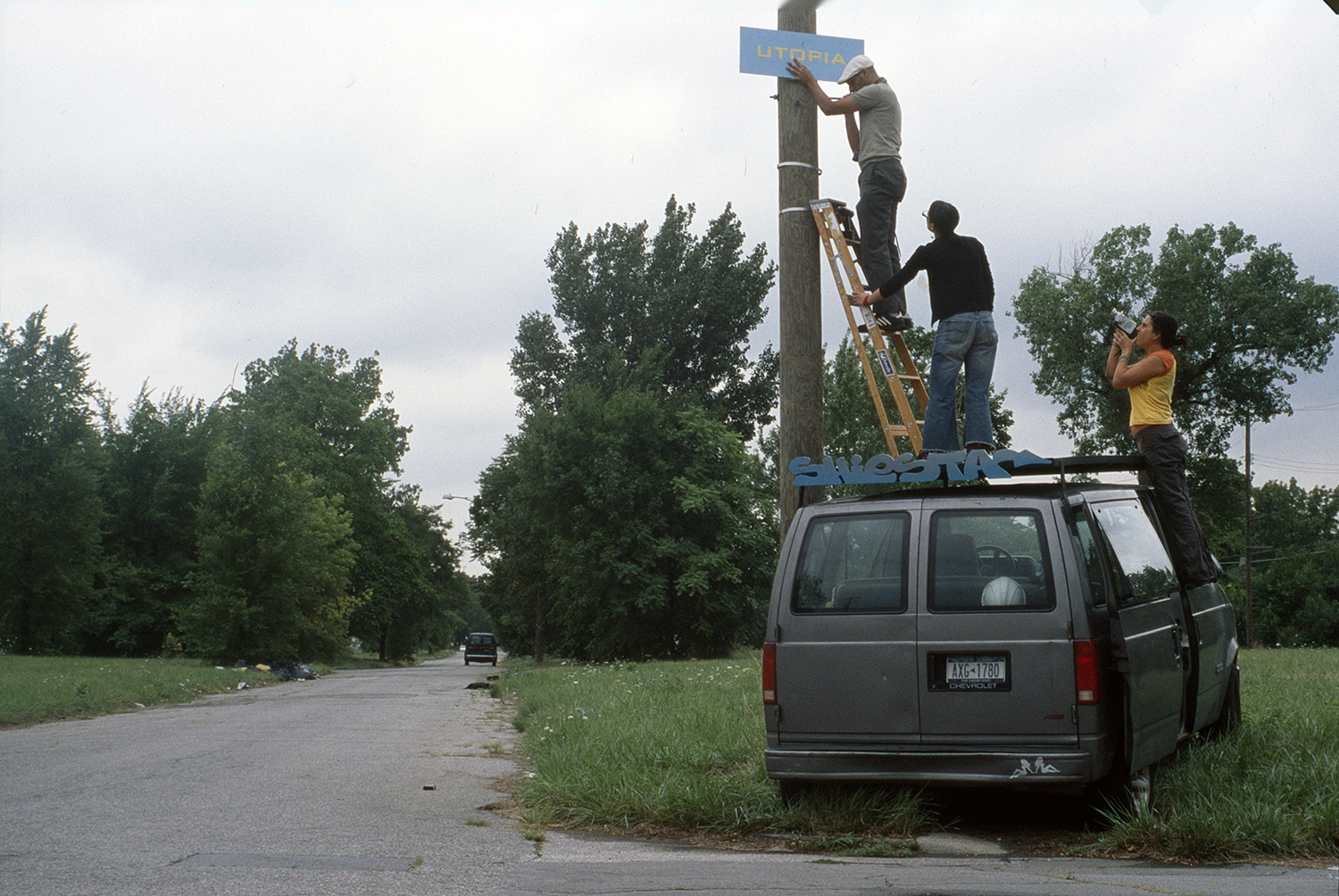
Installation work for ‘Detroit is Everywhere: Post-Urban Landscape’ (1995) Image courtesy of Park Kyong
A Laboratory of Protocols
StoreFront’s first official programme, ‘Performance A–Z’, reveals this attitude with relative clarity. Beginning in September 1982, twenty-six artists, musicians, and performers were each assigned one letter of the alphabet, with one person performing each day over the course of twenty-six days. Every performance was free, and the programme made use not only of the gallery interior but also of the StoreFront window, sidewalk, and street. StoreFront’s archive records that the small 10-by-21-foot space and its large glass window meant that the relationships among performers, audiences, pedestrians, the street, and the gallery were constantly shifting. What is particularly interesting is not so much the content of the programme as its rules. What StoreFront created was a minimal framework consisting of the alphabet, dates, and times, and the participants filled in everything within that framework. Curating, in other words, became less a matter of completely determining what would be shown than of creating the conditions in which different actions could take place.Here, it is necessary to understand the ‘community’ addressed by StoreFront somewhat differently. Today, when we speak of a community programme, it is easy to imagine a process that represents residents of a particular area or gathers their opinions. StoreFront’s approach was rather different. Instead of representing a single community that already existed, it communicated with the public in a fluid way by using programmes to create temporary encounters among people who would not ordinarily meet. What StoreFront produced was not so much a fixed community as a provisional one formed around a particular issue. Rather than a community existing first and StoreFront simply containing it, relationships of communication were created through the forms of events and participation.
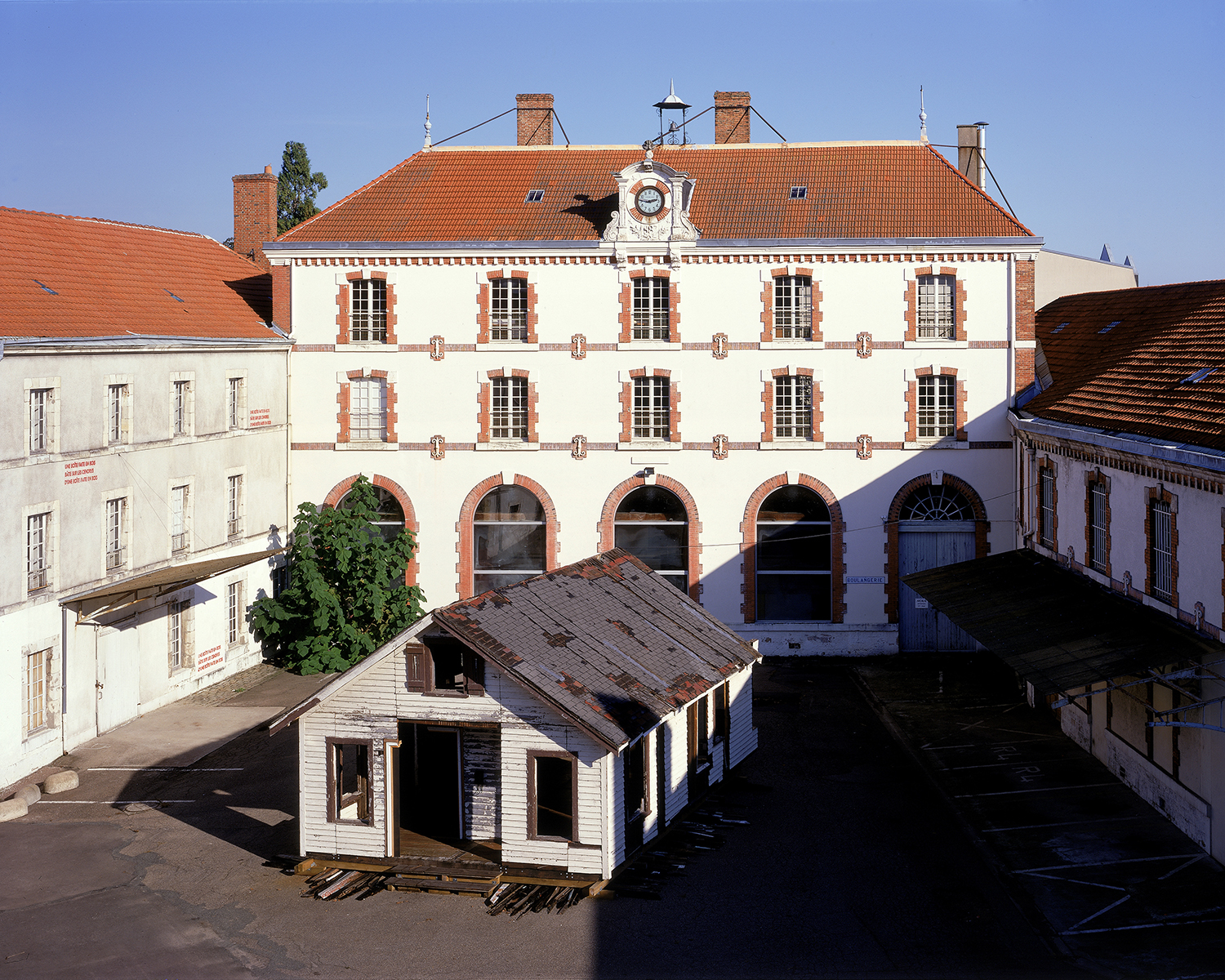
European traveling exhibition of ‘24260: The Fugitive House’ (2001) in Orléans, France / Image courtesy of Park Kyong
In ‘Gowanus Canal Redefined’, held in the same year, this mode of participation expanded to questions of the city. At the time, the Gowanus Canal area was a complex mixture of industrial facilities, underused factories, the canal, parks, and residential areas. StoreFront and the Gowanus Memorial Artyard organised an architectural competition focused on this area, but its purpose was not to select a single good development proposal. According to the project’s official description, its aim was to foster interaction between artists and the local community and to encourage analysis of the area’s geographical, economic, and social conditions. In a conventional architectural competition, a client defines the problem and architects submit answers, but in this project, the competition itself became a way of rereading the problem. Before determining what should be preserved and what should be developed, it asked multiple participants to interpret, in their own ways, what elements constituted the area and how those elements related to one another. Rather than ‘participatory design’, it was closer to an experiment in distributing the authority to read the city.
This also points to a distinctive feature of the way StoreFront addressed social issues. Rather than having the institution first declare a correct answer or political position and then communicate it to an audience, StoreFront turned an issue into a question that was then opened up to the public and allowed different people to produce different responses. Of course, because StoreFront still decided which issues to select, whom to invite, and what to show, it would be difficult to describe the process as completely horizontal participation, but it at least presented another possibility against the convention that architectural judgment is a process in which experts provide a completed answer.
The 1983 ‘Soup Kitchen’ demonstrates another way in which StoreFront operated. For approximately two weeks, the programme held performances every evening to raise funds for New York’s poor, while proceeds from sales of the photographs on display were also given to people in need. Participants included Fashion Moda, an alternative art space founded in 1978 that played an important role in the early growth of hip-hop and graffiti art, as well as the Food for the Soup Kitchens Committee and the Coalition for the Homeless.
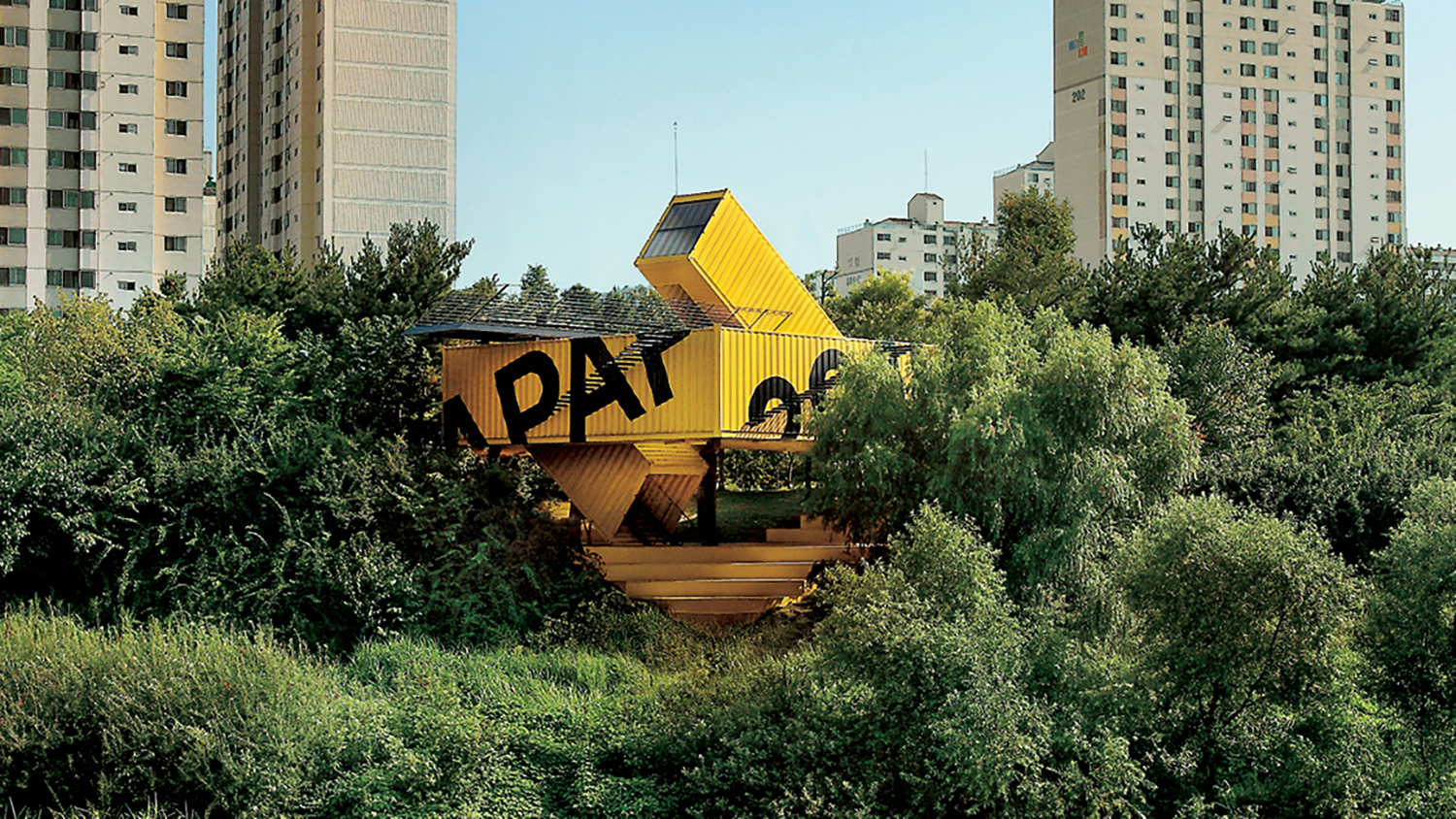
Open School by LOT-EK (2010) featured in the 3rd Anyang Public Art Project (APAP 2010) under Artistic Director, Park Kyong / Image courtesy of LOT-EK / ©Kim Myoung-sik
Here, StoreFront became a place for connecting people, resources, and networks before it was a place for showing social problems. The distinction may seem small, but it is important. There can be any number of exhibitions that take social issues as their subject. Yet whether those issues are consumed inside an exhibition space as images and discourse, or whether the exhibition redirects its space, audience, money, and networks into different social relationships, is an entirely different matter. In ‘Soup Kitchen’, performance was both an object of viewing and a means of bringing people together, while the exhibition became a mechanism for transferring resources through sales.
Placed side by side, ‘Performance A–Z’, ‘Gowanus Canal Redefined’, and ‘Soup Kitchen’ make StoreFront’s particularity somewhat clearer. In the first, StoreFront gave part of its time and space over to participants; in the second, it distributed the authority to interpret the city; and in the third, it connected the audience and resources of a cultural programme to another social purpose. The outcomes of the three projects were entirely different, but they resembled one another in that StoreFront, rather than producing all of the content itself, created conditions in which people could do something. Perhaps for this reason, participant instructions, competition notices, correspondence, proposals, budgets, and newsprint appear in StoreFront’s archive as equally important as photographs of completed exhibitions. The archive itself preserves research materials, letters, financial documents, promotional materials, and proposals from the moment a programme was conceived through its execution and reception. These materials are not merely administrative documents that happened to remain after an exhibition. They demonstrate that the process of inviting people, explaining how they could participate, and recirculating the results was itself part of StoreFront’s programming.
In this sense, simply calling StoreFront a gallery or a platform may not be sufficient. The word ‘platform’ easily brings to mind an empty place where different people can gather. StoreFront, however, did more than provide a place. Each time, it created a new set of rules. Sometimes it gave one person a voice for a single day; sometimes it turned one area of the city into a question that was opened up to the public; at other times, it linked performances and sales to fundraising. Rather than an empty platform waiting to see what might enter it, StoreFront was closer to a laboratory of protocols whose operating method changed according to the situation. What has always mattered about StoreFront is not that it discovered the correct answer to a problem, but that it continued to experiment with how a cultural institution could form relationships with people, an approach that was also evident in the Korean Pavilion at the 2023 Venice Biennale, directed by Park Kyong together with Jung Soik.
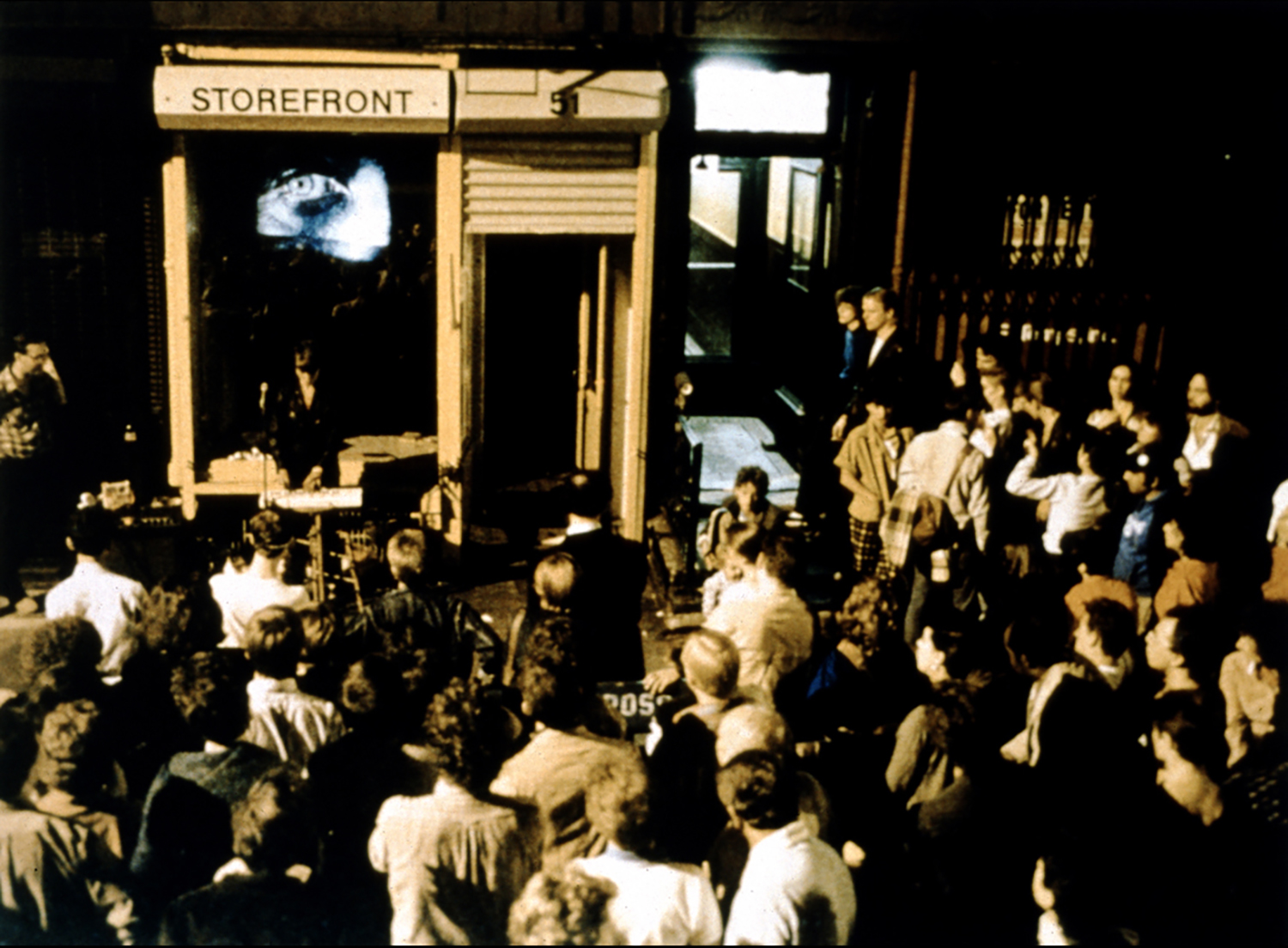
View of ‘Performance A–Z’(1982) at StoreFront for Art and Architecture / Image courtesy of Storefront for Art and Architecture
Now, StoreFront, Seoul
Why, then, StoreFront now? The situation in Seoul more than forty years later is different from that of New York at the time. Today, Seoul has many spaces in which architecture can be discussed, as well as biennales and exhibition institutions, foundations and independent spaces, publishing and social media, all providing ample channels through which people can speak. It has become far easier than in the past for architects simply to present their ideas to the world. Much like the architectural scene of 1980s New York, journals centred on theory and criticism are now increasingly visible in Seoul, alternative publications containing the ideas of diverse architects continue to appear, and efforts to bring new young architects to the fore are taking place both within and outside established institutions.Yet the fact that there are more platforms does not in itself mean that there are more structures through which people can act together. Numerous exhibitions and discussions take place within Korea’s architectural field, but it is relatively rare for different people to gather around a single urban issue, produce materials together, test alternatives, share the expertise and resources required, and then return the results to society.
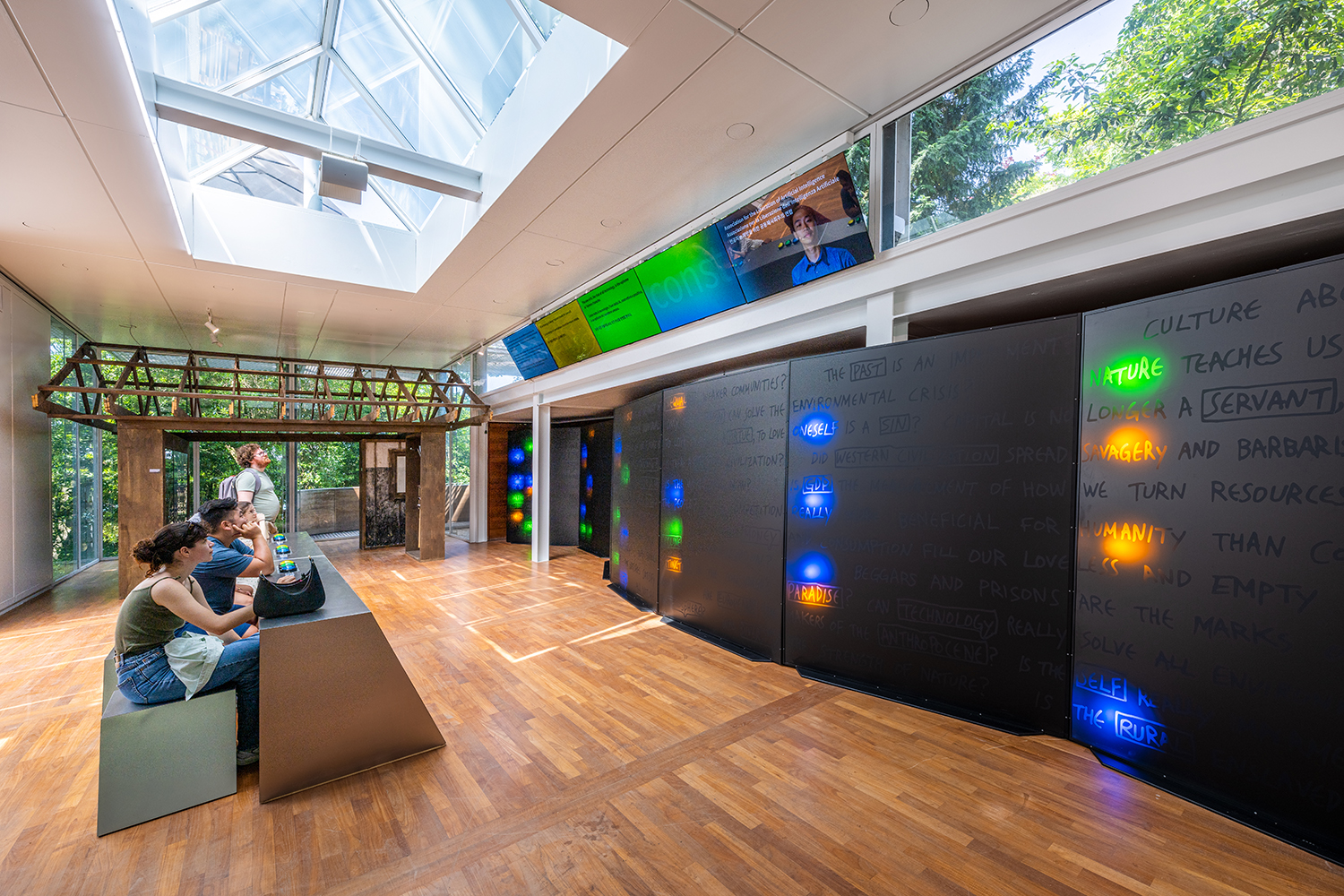
Together How Game presented by the Co-Artistic Directors (Park Kyong, Jung Soik) at the Korean Pavilion of the 2023 Venice Biennale, ‘2086: Together How?’ / Image courtesy of Arts Council Korea / ©Daniele Nalesso
This is why we need to look again at StoreFront’s experience today. What should be learned from StoreFront is not the image of a small gallery in downtown New York, but rather an attitude toward how differently an organisation with a physical location can use its space, resources, networks, and expertise. Instead of producing one more exhibition, can part of a programme actually be handed over to someone else? Instead of approaching an urban conflict with a ready solution, can the problem be turned into a question whose answer has not yet been determined? Can the knowledge and experience of people who are actually connected to the issue change the direction of the programme? And once an event is over, we need to ask whether what remains consists only of photographs and records, or of relationships and tools that make the next action possible.
The most interesting legacy of StoreFront, which marks its 44th anniversary this September, is not the space itself, but its mode of operation: the way it continuously transformed itself, according to need, into a performance venue, a site for competitions, a place for fundraising, a site of publishing production, and a temporary public realm connected to the street. Could the social role of architecture also begin not with grand declarations, but with small devices that create the conditions for participation, connect people who would otherwise never meet, and turn individual problems into shared questions? What we need now may likewise be not a greater number of new spaces, but more experiments in operating the spaces that already exist with greater flexibility.
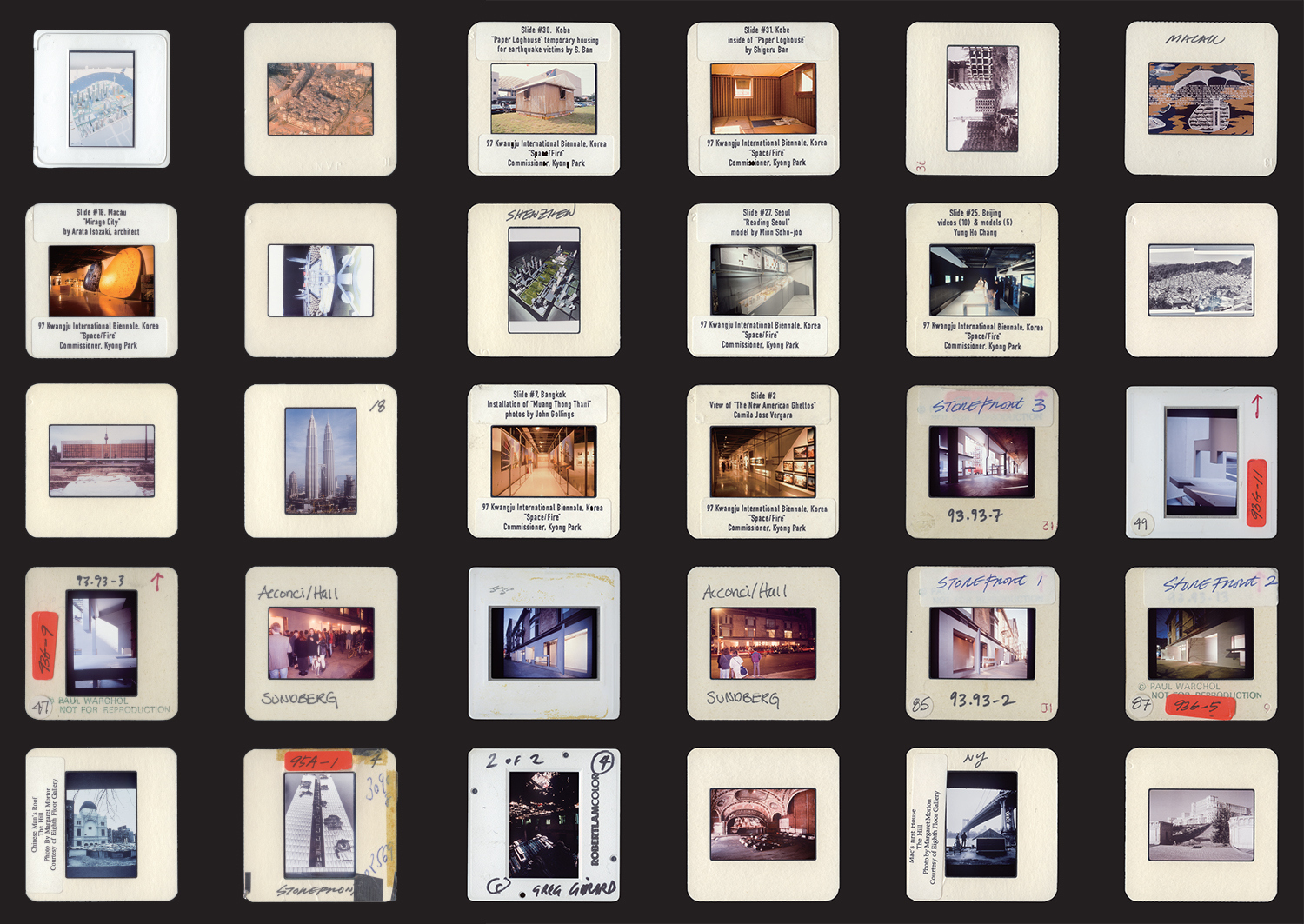
A selection from Park Kyong’s slide archive. After completing nearly two decades of teaching at UC San Diego and returning to Korea, Park brought with him an extensive personal archive accumulated over the course of his career, beginning with his years at StoreFront for Art and Architecture. The archive includes slides, audiovisual materials, documents, and other physical materials, and is currently being organised. Images courtesy of Park Kyong
_
1 At its founding, the institution used the name ‘StoreFront for Art and Architecture’, but it now uses ‘Storefront for Art and Architecture’, with a lowercase ‘f’ in ‘front’. This essay follows the earlier capitalisation when referring to StoreFront during Park’s directorship.2 These two articles were initiated as part of ‘Kyong Park’s Architecture and Art’, a project selected for the Arts Council Korea (ARKO) 2026 ARKO Architecture Arts Lab programme.